
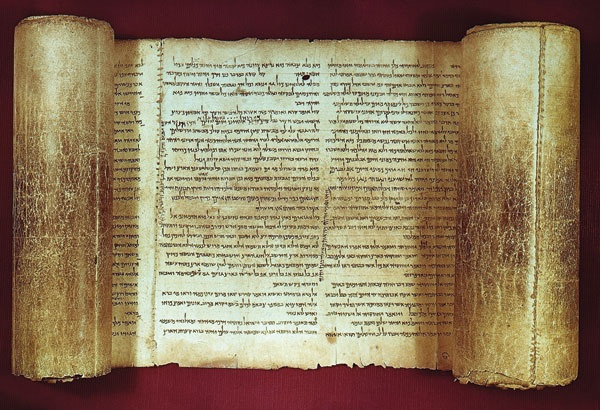
A Call for Biblical Discernment
People often wonder: How many words in the Bible have been mistranslated from the original Hebrew and Greek into English? The honest answer is: not many—but the few that are mistranslated or poorly interpreted can significantly affect how we understand Scripture.
The good news is that most of the Bible has been accurately and faithfully translated. The essential doctrines—salvation through Christ, God’s nature, the resurrection, the authority of Scripture—remain clear and consistent across nearly all major translations. God has protected His Word.
But even small translation errors can lead to big misunderstandings.
One Word, Many Meanings
Take the word “hell,” for example. In the original languages, there are four different words translated as “hell” in English:
Sheol (Hebrew): the grave or the place of the dead, Hades (Greek): similar to Sheol, a temporary place of the dead, Gehenna (Greek): a place of fiery judgment, Tartarus (Greek): a deep prison for fallen angels.
All of these are unique in meaning—but many English Bibles collapse them into just one word: “hell.” That simplification causes confusion about death, the afterlife, and God’s judgment.
Words that Shift Our Understanding
Another example is the word “church.” In the Greek, the word is ekklesia, which means “assembly” or “called-out ones.” But translators chose the word “church,” a term that eventually became associated with buildings and religious institutions rather than a body of believers. This subtle change has shaped how many think of the Christian faith as a place instead of a people.
In Acts 12:4 (KJV), the word Pascha (Passover) is mistranslated as “Easter,” a term that has pagan roots. This may seem minor, but it introduces a holiday that wasn’t part of the early Church’s biblical calendar, and it distorts what the text originally said.
Repentance, Love, and Baptism
The word “repent” in English often conveys sorrow or penance. But the Greek word metanoia literally means “to change one’s mind.” While sorrow may accompany repentance, true repentance is about turning from sin and changing direction—not just feeling bad.
When the Bible says “love,” it could mean several different things in Greek:
Agape (unconditional love), Phileo (brotherly affection), Eros (romantic love), Storge (family love).
But English simply says “love.” That flattens the emotional depth of passages like John 21:15–17, where Jesus and Peter are having a heartfelt conversation using different Greek words for love. That nuance is lost in translation.
The word “baptize” comes from the Greek baptizo, meaning “to immerse.” But rather than translating the word, most English versions simply kept it as “baptize,” likely to avoid doctrinal debates. As a result, the original meaning—immersion—is often blurred, leading to confusion about how baptism was practiced in the early Church.
“Fulfill,” “Perfect,” and “Worship”
When Jesus said He came to “fulfill the law” in Matthew 5:17, the Greek word pleroo means to complete, to bring to fullness, or to properly teach. But many interpret “fulfill” to mean He ended or canceled the law. That misunderstanding contradicts the very next verses where Jesus says not a single part of the law will pass away.
Similarly, when Jesus tells us in Matthew 5:48, “Be perfect as your Father in heaven is perfect,” the word teleios in Greek actually means “complete” or “mature.” He’s calling us to spiritual maturity—not sinless perfection.
Even the word “worship” gets muddled. In the Greek, proskuneo means to physically bow or adore, while latreuo means to serve or minister. Both are often translated simply as “worship,” but they describe very different actions. By lumping them together, we lose the richness of what worship truly is—both reverent awe and faithful service.
So What Do We Do?
First, don’t panic. The Bible you hold is still the Word of God. Its truth stands. No essential doctrine hangs on a single mistranslated word. But God also calls us to study diligently and “rightly divide the word of truth” (2 Timothy 2:15). He honors those who seek understanding with a humble heart.
Acts 17:11 praises the Bereans for testing what they heard against Scripture daily. We can do the same. Today, tools like Strong’s Concordance, interlinear Bibles, and websites like BlueLetterBible.org or BibleHub.com can help anyone study the original words behind the text.
Also, comparing multiple translations (KJV, ESV, NASB, LSB) and referencing the Greek Septuagint for Old Testament quotes can uncover richer meaning and help clarify difficult verses.
Final Thoughts
In summary: yes, some words in the Bible have been mistranslated or misunderstood. But no, the integrity of God’s Word has not been lost. The Spirit still leads us into truth. We are called not to fear—but to dig deeper, to be faithful stewards of what God has given us.
As Psalm 119:130 says, “The unfolding of Your words gives light; it gives understanding to the simple.” May we be believers who love truth over tradition, and who honor God by seeking to understand His Word as clearly and purely as possible.
 Feeding the Flock Ministry
Leave a comment