
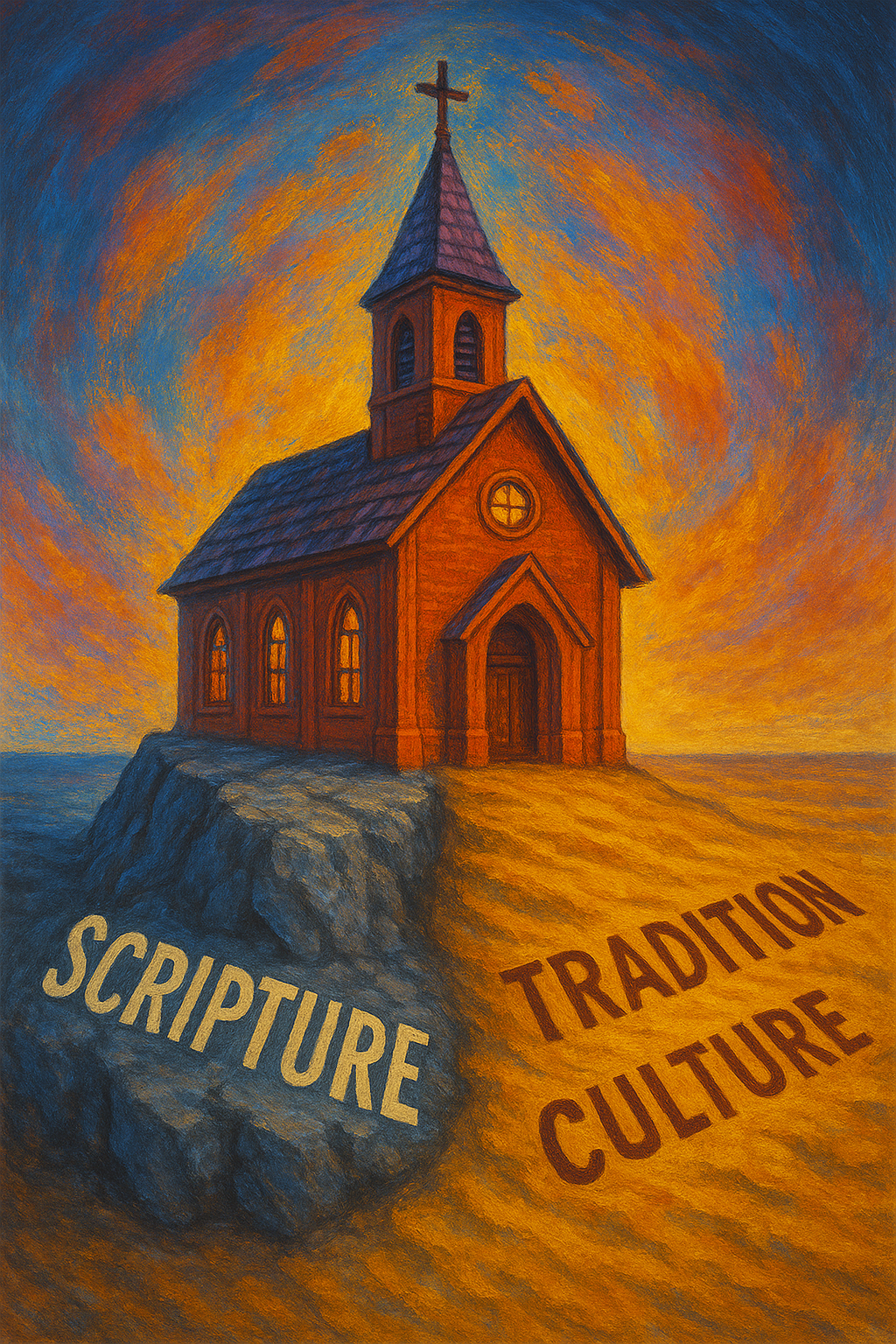
Across the world — whether in Catholic, Protestant, Orthodox, Pentecostal, Evangelical, or independent congregations — Christians gather under the name of Jesus Christ. We sing His praises, proclaim His gospel, and seek to serve Him. Yet despite our diversity, one central error has plagued the church in every generation and in nearly every denomination.
That error can be summed up simply:
Replacing the authority of God’s Word and the sufficiency of Christ with man‑made traditions, cultural adaptations, and personal interpretations that distort the gospel.
It is the slow but dangerous shift from “Thus says the Lord” to “This is what we think is best.”
The Root Error in Action
This error shows itself in many ways. In some churches, it takes the form of adding requirements to the gospel — extra sacraments, rituals, or membership in a specific church as prerequisites for salvation. In others, it comes from subtracting the harder parts of the gospel — removing calls to repentance, holiness, or obedience in order to make the message easier to accept.
Paul warned against both extremes when he told the Galatians:
“I am amazed that you are so quickly deserting Him who called you by the grace of Christ, for a different gospel… which is really not another; only there are some who are disturbing you and want to distort the gospel of Christ.” (Galatians 1:6‑7)
Historical Roots of the Problem
This drift away from God’s pure truth is not new. In the Old Testament, Israel repeatedly mixed God’s commands with pagan customs and man‑made laws until the worship of God was corrupted (Jeremiah 2:13, Isaiah 29:13).
In the New Testament, Jesus rebuked the Pharisees for the same thing:
“You nullify the word of God by your tradition that you have handed down. And you do many things like that.” (Mark 7:13)
The early church fathers fought against heresies that twisted the gospel into legalism, mysticism, and self‑indulgence. The Protestant Reformers rose up against a church hierarchy that had elevated tradition, papal authority, and sacramental systems above the clear teaching of Scripture.
But history shows that even reformed movements, once established, eventually fall into the same trap — elevating their own methods, traditions, and interpretations to a level that rivals or replaces God’s authority.
Four Ways This Error Appears Today
Adding to the Gospel Some churches teach that salvation requires faith plus baptism, confirmation, or belonging to their specific group. But Scripture declares we are “saved by grace through faith… not as a result of works” (Ephesians 2:8‑9). Subtracting from the Gospel Many ministries avoid speaking about sin, repentance, and God’s judgment to avoid offending people. Yet Jesus began His ministry with “Repent, for the kingdom of heaven is at hand” (Matthew 4:17). Exalting Man’s Authority This happens when tradition, denominational loyalty, or the words of church leaders carry more weight than the Bible itself. The Bereans were commended for testing even Paul’s teaching against Scripture (Acts 17:11). Conforming to Culture Some churches adjust biblical teaching on marriage, gender, sexuality, and holiness to align with modern trends. But James warns, “Friendship with the world is enmity with God” (James 4:4).
The Danger of Divided Allegiance
This root error leads to a divided allegiance: honoring God with our lips but following man with our hearts (Matthew 15:8). It is a subtle but deadly compromise — keeping Jesus in name but replacing His authority with our own preferences.
Jesus made it clear that we cannot serve two masters (Matthew 6:24). The church cannot serve both Christ and culture, both the Word of God and the wisdom of men.
The Way Back: Returning to God’s Authority
The solution is not to abandon the church but to reform it — beginning with ourselves. Every believer must:
Return to Scripture as the final authority in faith and practice (2 Timothy 3:16‑17). Test all teachings against the Word of God (1 Thessalonians 5:21). Refuse to compromise on the essentials of the gospel (Jude 1:3). Seek Christ’s glory above personal comfort, popularity, or tradition (Colossians 3:17).
If we keep Christ at the center, Scripture as our foundation, and the gospel as our focus, we will stand firm against the drift of human ideas and worldly influence.
Conclusion
The key error in the global church is not confined to one denomination or tradition — it is a human problem. We all tend to replace God’s ways with our own. But Jesus has called His people to walk in truth, to abide in His Word, and to follow Him alone.
As He said in John 8:31‑32:
“If you abide in My word, you are truly My disciples, and you will know the truth, and the truth will set you free.”
May we, the church of Jesus Christ, return wholeheartedly to Him — rejecting man‑made distortions and holding fast to the truth that saves.
Leave a Reply