
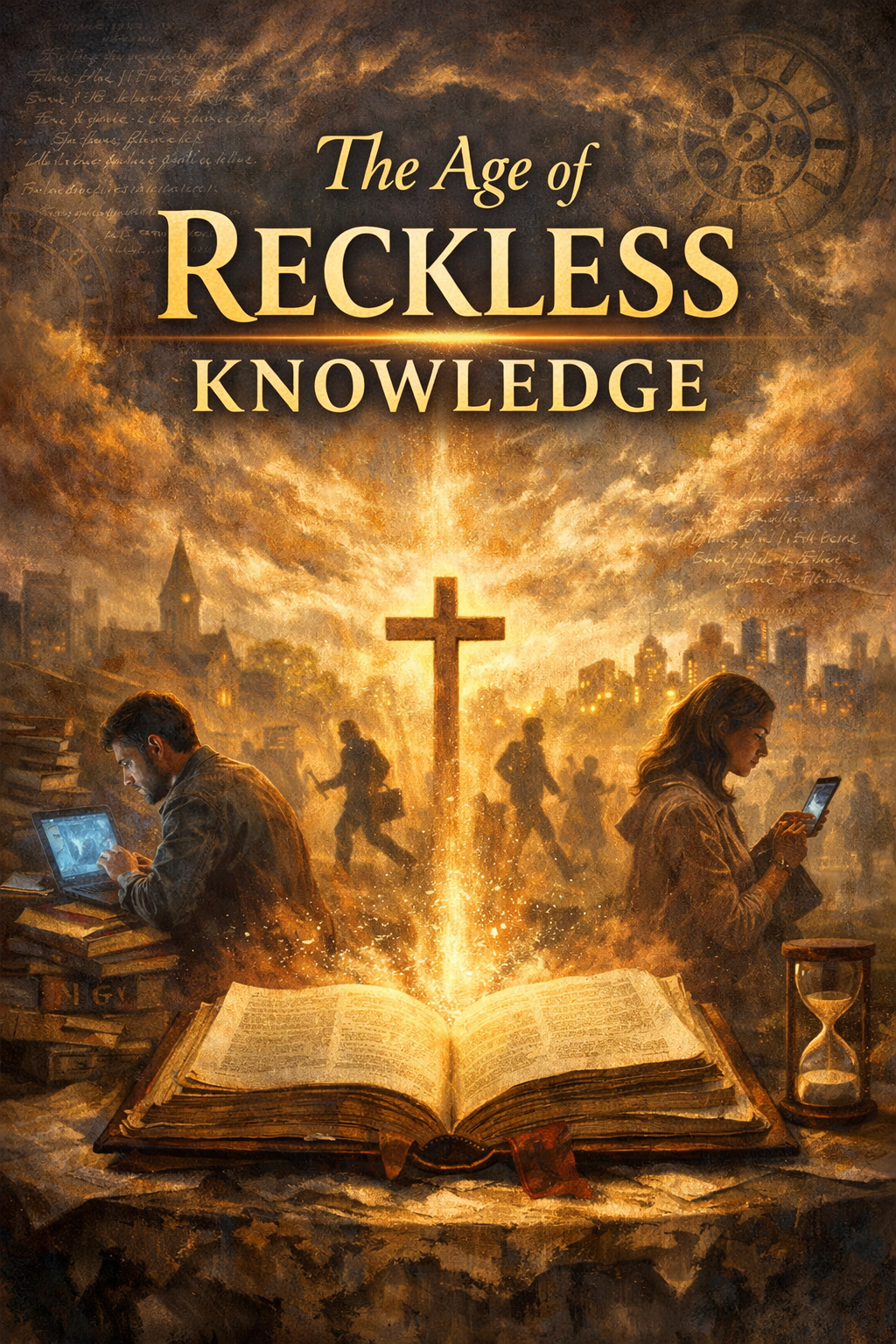
Daniel 12:4 and the Crisis of Understanding in the Modern Church
There is a single line in Daniel’s final vision that feels less like distant prophecy and more like spiritual diagnosis for our moment. Daniel is told to seal the words of the book until the time of the end, when many will run to and fro and knowledge will increase. What makes this prophecy unsettling is not the promise of expanding information but the implication that understanding will not necessarily grow alongside it. Scripture does not present this increase in knowledge as triumph but as tension. It portrays a people endlessly searching, endlessly scanning, endlessly consuming, yet still unable to perceive what truly matters. The danger of the last days is not that truth disappears but that truth becomes ubiquitous and still remains unrecognized. The crisis is not scarcity of Scripture but saturation without surrender.
Daniel 12 does not describe a world cut off from divine revelation. It does not suggest that God’s Word will be inaccessible or hidden. Instead, it warns of a far more subtle and spiritually lethal condition: abundance without discernment. The Hebrew expression translated “run to and fro” carries the sense of restless investigation — movement without settlement, searching without stillness, accumulation without depth. It is not the posture of someone kneeling before God’s Word but of someone racing through it. It is paired with the statement that knowledge shall increase, not wisdom, not understanding, not reverence. Scripture distinguishes carefully between these things. Knowledge can be multiplied mechanically; understanding cannot. Knowledge can be gathered through effort; understanding must be received through humility. Knowledge can inflate; understanding transforms. And this difference lies at the heart of Daniel’s warning.
Throughout Scripture, knowledge and understanding are not synonymous. Proverbs teaches that the Lord gives wisdom and that from His mouth come both knowledge and understanding, but the pairing itself reveals their distinction. Knowledge answers what is true; understanding answers why it matters and how it must shape the one who hears it. Knowledge fills the mind; understanding reforms the soul. Knowledge can exist apart from obedience; understanding cannot. The Pharisees exemplify this distinction vividly. Jesus acknowledged that they searched the Scriptures daily, convinced that eternal life could be found in textual mastery, yet He rebuked them for refusing to come to Him, the One to whom those Scriptures testified (John 5:39–40). Their problem was not ignorance but misalignment. They had information without illumination, precision without perception, structure without surrender. They knew the text but did not know the God who breathed it. And that pattern did not end with the religious leaders of the first century. It has only intensified in an age where access has exploded beyond anything the ancient world could have imagined.
No generation in church history has possessed what we possess. Entire libraries now fit inside phones. Multiple Bible translations, interlinear texts, Greek and Hebrew lexicons, theological encyclopedias, commentaries across every tradition, sermons on demand, debates livestreamed daily, podcasts released hourly, and AI tools capable of summarizing centuries of theology in seconds have become ordinary features of Christian life. The modern believer is surrounded by Scripture, teaching, explanation, interpretation, and argument at every moment. And yet, paradoxically, the church increasingly suffers from fragmentation, shallow discipleship, confident error, spiritual pride, doctrinal tribalism, thin repentance, and low discernment. We are not starving for information; we are drowning in it. We are informed but not formed. This is Daniel 12:4 lived out in real time: restless movement, multiplying knowledge, diminishing wisdom.
The tragedy is not that Scripture is inaccessible but that Scripture is approached without stillness. We run to and fro even within our reading. We skim. We scan. We quote. We extract. We jump from verse to verse, sermon to sermon, debate to debate, never dwelling long enough to be pierced. Yet God says through the psalmist, “Be still, and know that I am God” (Psalm 46:10). Stillness is not optional to understanding; it is essential. The Word of God is not merely meant to be consumed but to be contemplated, not merely examined but encountered. Speed produces data. Stillness produces discernment. Without stillness, Scripture becomes material for discussion rather than a means of transformation.
Even more dangerously, Scripture is often studied without obedience. Jesus made a direct connection between obedience and understanding when He said that if anyone is willing to do God’s will, he will know whether the teaching is from God (John 7:17). In other words, illumination follows submission. Revelation follows surrender. When obedience becomes optional, understanding dries up. Scripture was never designed to be mastered before it is obeyed. It was designed to master us. Yet modern Christianity often treats the Bible as an object to analyze rather than a voice to obey, as content to consume rather than authority to submit to. Knowledge accumulates while transformation stalls. The mind sharpens while the heart remains untouched. And over time, truth becomes something we wield rather than something that wounds, heals, and reforms us.
This problem deepens when Scripture is interpreted without Christ at the center. Jesus told the religious leaders that Moses wrote about Him and that the Scriptures testified of Him, yet they failed to see Him because they read the text through theological frameworks rather than through redemptive submission. After His resurrection, Luke tells us that Jesus opened the minds of the disciples to understand the Scriptures (Luke 24:45). The text had not changed. Their minds had. Understanding does not increase when information expands but when Christ becomes the interpretive center. When Christ is peripheral, Scripture becomes fragmented. When Christ is central, Scripture becomes coherent. Information grows when Christ is sidelined. Understanding grows when Christ is enthroned. Without Him, the Bible becomes a book of doctrines. With Him, it becomes the living voice of God calling sinners to repentance, faith, obedience, and transformation.
Another reason understanding remains rare in an age of biblical abundance is that Scripture is increasingly consumed in isolation. Many believers today are self-taught theologians without spiritual covering, accountability, or correction. Algorithms shape doctrine more than shepherds do. Platforms replace pastors. Comment sections replace counsel. Yet Scripture insists that wisdom flourishes in community and that safety exists in an abundance of counselors (Proverbs 11:14). Isolation breeds confidence without wisdom, certainty without humility, and conviction without correction. Knowledge acquired alone hardens. Understanding formed in community softens. The former produces pride; the latter produces maturity. And in an age where theological identity is often built through online tribes rather than embodied churches, fragmentation becomes inevitable. People become more certain while becoming less teachable. They know more and understand less.
The tragic irony of our time is that the prophecy is fulfilled not because people lack Bibles but because they mistake access for revelation. We quote Scripture without being crucified by it. We debate theology without trembling before God. We accumulate sermons without carrying crosses. Paul warned that knowledge puffs up but love builds up (1 Corinthians 8:1). Inflated knowledge produces noise, not maturity. It produces arguments, not holiness. It produces confidence, not Christlikeness. It creates theologians who are skilled in controversy but poor in repentance, fluent in doctrine but unfamiliar with brokenness, articulate in debate but shallow in prayer. This is not the fruit of understanding. It is the fruit of restless knowledge.
Jesus confronted this spirit repeatedly in the Gospels. He rebuked the Pharisees not because they lacked biblical knowledge but because they used Scripture as a shield against God rather than as a doorway into Him. He told them they strained out gnats and swallowed camels, tithed mint and dill while neglecting justice, mercy, and faithfulness (Matthew 23:23–24). Their problem was not accuracy but distortion. They magnified details while missing the heart of God. He warned that they had taken away the key of knowledge, not entering themselves and hindering others from entering as well (Luke 11:52). Their expertise became an obstacle rather than a guide. Daniel’s prophecy finds its echo here: restless searching without spiritual sight, scriptural mastery without submission, information without transformation.
This stands in stark contrast to the biblical vision of meditative engagement with Scripture. Throughout church history, faithful believers understood that God’s Word is not meant to be skimmed but savored, not rushed but received, not conquered but contemplated. The psalmist describes the blessed man as one whose delight is in the law of the Lord and who meditates on it day and night (Psalm 1:2). Meditation is not frantic searching. It is lingering. It is returning. It is waiting. It is allowing the Word to question us before we question it, to wound us before we wield it, to shape us before we shape arguments from it. Where restless knowledge consumes texts quickly, meditation dwells slowly. Where restless knowledge collects facts, meditation invites transformation. Where restless knowledge measures success by how much is read, meditation measures success by how much life is changed. Daniel’s warning speaks precisely to this contrast. Knowledge may increase through speed, but understanding only grows through stillness.
This tension between information and formation explains much of the spiritual anemia in modern Christianity. Churches are often filled with people who can quote Scripture fluently but struggle to forgive deeply, serve quietly, repent quickly, love sacrificially, or endure faithfully. Leaders can articulate theology clearly while displaying impatience, pride, harshness, or self-protection. Communities can debate doctrine fiercely while neglecting prayer, repentance, reconciliation, and mercy. This is not merely hypocrisy; it is formation failure. It is what happens when Scripture is approached primarily as material for mastery rather than as a means of sanctification. The Word becomes something we handle instead of something that handles us. We become skilled interpreters but poor disciples.
Daniel 12 does not end with despair, however. It ends with purification. The angel declares that many will purify themselves, make themselves white, and be refined, while the wicked will continue acting wickedly. None of the wicked will understand, but those who are wise will understand (Daniel 12:10). This is one of the most sobering and hope-filled lines in the chapter. Understanding is not distributed intellectually but morally and spiritually. It is not granted to the clever but to the humble. Not to the loud but to the obedient. Not to the restless but to the reverent. Understanding belongs to the wise, and in Scripture, wisdom is not defined primarily by intelligence but by fear of the Lord. Wisdom begins where pride ends. Understanding begins where submission begins. Illumination flows not from brilliance but from brokenness.
This reveals something profound: understanding is not merely cognitive but moral. It is not simply about seeing clearly but about loving rightly. It is not just about grasping truth but about being grasped by it. Those who understand are those who fear God, walk humbly, obey what they already know, remain teachable, repent quickly, and read Scripture not to be armed but to be changed. Understanding grows in those who tremble at God’s Word, as Isaiah says, rather than those who merely analyze it. It flourishes in those who approach Scripture with repentance rather than presumption, surrender rather than strategy, hunger rather than ambition.
This brings Daniel’s prophecy directly into the heart of the modern church. The danger facing believers today is not biblical illiteracy but spiritual dullness. Not lack of access but lack of awe. Not absence of teaching but absence of trembling. The church risks becoming biblically saturated yet spiritually hollow, theologically articulate yet morally anemic, doctrinally loud yet prophetically blind. Daniel warns us that the last days are not marked by ignorance of Scripture but by misuse of it. The crisis is not that people do not know the Bible. The crisis is that people know it without knowing God.
This explains why Jesus did not rejoice when people merely recognized His miracles or admired His teachings. He called people to follow Him, not simply study Him. He invited them to take up their cross, not merely take notes. He did not say, “Learn about me,” but “Come to me.” The danger of restless knowledge is that it produces observers rather than disciples, analysts rather than followers, critics rather than worshipers. It forms theologians who speak about God fluently while remaining untouched by Him personally. It creates Christians who can explain justification while struggling to forgive, articulate grace while withholding mercy, defend truth while resisting repentance.
Understanding, by contrast, always produces transformation. When Jesus opened the minds of the disciples to understand the Scriptures after His resurrection, He did not merely expand their comprehension; He reshaped their lives. They moved from fear to courage, from confusion to clarity, from hiding to proclamation, from despair to mission. Understanding does not end in insight; it ends in obedience. It does not stop at clarity; it produces conformity to Christ. It does not generate pride; it generates worship. It does not create noise; it creates holiness.
Daniel’s prophecy quietly calls the church back to this posture. Not to abandon study, but to submit it. Not to reject knowledge, but to subordinate it to obedience. Not to retreat from theology, but to anchor it in humility. Not to flee from doctrine, but to ensure doctrine leads to devotion. Scripture is not meant to terminate in information but to culminate in formation. The Word of God is not primarily an object of investigation but a means of transformation. It is not merely true; it is alive. And living words demand living responses.
In an age where knowledge multiplies and attention fragments, the church must recover stillness. In a world obsessed with speed, believers must relearn slowness. In a culture addicted to information, Christians must return to meditation. In communities shaped by debate, the people of God must return to repentance. In churches driven by platforms, the church must return to prayer. Understanding grows not in restless movement but in reverent waiting. It grows not in constant consumption but in quiet submission. It grows not through mastering Scripture but through being mastered by it.
This is why Daniel’s prophecy remains so hauntingly relevant. It does not describe atheism. It describes religious activity without spiritual perception. It does not predict biblical illiteracy. It predicts biblical saturation without discernment. It does not warn of secularism alone. It warns of religiosity without revelation. People will run to and fro, and knowledge will increase — but understanding will remain rare. That is the danger. That is the crisis. And that is the invitation.
Because Scripture also promises that those who are wise will understand. Those who fear the Lord will see clearly. Those who walk humbly will be taught. Those who obey what they already know will be given more. Those who approach Scripture with trembling will receive illumination. Those who seek God rather than arguments will find Him. The issue is not whether knowledge will increase. It will. The question is whether the church will choose formation over information, submission over speed, Christ over controversy, obedience over expertise, and stillness over noise.
Daniel’s prophecy confronts us with a sobering truth: the final crisis is not intellectual but spiritual. The danger is not that people lack Scripture but that they approach it wrongly. The danger is not that people do not read the Bible but that they read it without repentance. The danger is not that people do not know doctrine but that doctrine no longer kneels before God. The danger is not that people do not speak truth but that truth no longer speaks to them.
And so the call of Daniel 12 is not panic but purification. Not fear but refinement. Not withdrawal but repentance. It invites the church to become wise again, not clever. To become holy again, not merely informed. To become discerning again, not merely articulate. To become humble again, not merely confident. To become still again, not merely busy. To become obedient again, not merely knowledgeable.
Because in the end, the greatest danger is not that we will lose the Bible.
The greatest danger is that we will have it — and still not hear God.
And that is the true tragedy of restless knowledge.
Leave a Reply