
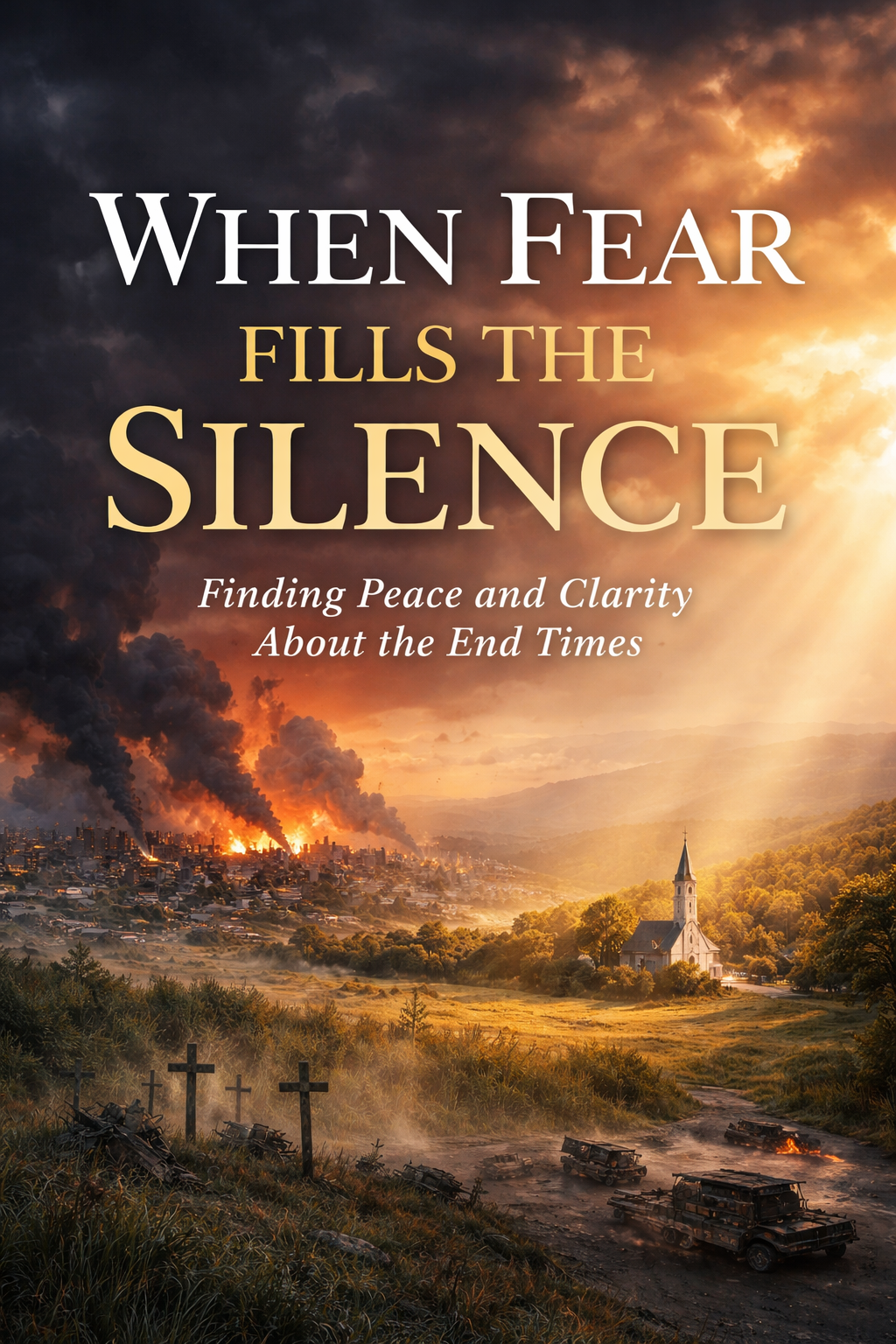
There is a growing weight many believers are carrying, and it is not always easy to put into words. It is the feeling that something is off—that the world is shifting in ways that are hard to explain, that events seem to be accelerating, and that perhaps we are standing on the edge of something final. For some, this weight is stirred by conversations with other Christians who speak with urgency about the end. For others, it is fueled by videos and voices online that confidently declare that what we are seeing now must be the fulfillment of biblical prophecy. And slowly, almost quietly, that exposure begins to shape the heart. What starts as curiosity can turn into uneasiness, and uneasiness can turn into fear.
What makes this especially troubling is that many who feel this way also love Scripture. They are not dismissing the Bible—they are trying to take it seriously. They read passages where Jesus speaks of wars and rumors of wars, of distress among nations, of signs in the heavens. They read about the visions given in Revelation, the warnings in the epistles, the call to be alert and ready. And yet, instead of clarity, they feel overwhelmed. Instead of peace, they feel like they are missing something—as though others have figured out a hidden timeline, and they are somehow left in the dark.
But that is not how God speaks to His people.
Scripture was never given to create confusion in the hearts of believers. It was not written to leave us anxious, guessing, or constantly bracing for the next disaster. When God reveals truth, He does so with purpose—not to obscure, but to illuminate. And if the result of how we are interpreting the end times is persistent fear, then something in that interpretation has gone off course.
One of the most important things we can do is return to the words of Jesus Himself and listen carefully—not just to what He said, but to how He said it. When He described the kinds of events that would take place—conflicts, upheaval, instability—He did not present them as signals that the end had already arrived. In fact, He gave a clear instruction that often gets overlooked: do not be frightened. He explained that these things must take place, but they are not, in themselves, the end. That means the very things that often trigger fear today were specifically mentioned by Jesus as reasons not to panic.
This is where many of the voices we hear today begin to diverge from Scripture. There is a tendency to take real, serious events and treat them as definitive proof that the final stage of history has begun. But Scripture does not point to isolated events—it describes a convergence, a coming together of conditions that form a clear and unmistakable picture. When we take one piece and elevate it above the whole, we create a sense of urgency that Scripture itself does not support.
Consider, for example, the ongoing conflicts in the Middle East. These are often presented as central indicators that the end is immediately upon us. And while that region is undeniably significant in biblical history and prophecy, what we see today is not a settled or unified condition moving toward a climactic resolution. It is ongoing instability, recurring tension, and unresolved conflict. The biblical descriptions of the end point toward something more defined—a period marked not just by conflict, but by a kind of alignment, a deceptive peace, and a broader global structure that simply does not yet exist in the way Scripture portrays it.
The same can be said when we look at the idea of a one-world system or unified global authority. While there are certainly movements toward international cooperation and influence, the world as it stands is deeply divided. Nations disagree, compete, and operate with independent agendas. The level of cohesion described in Scripture—whatever one’s interpretation of those passages may be—is not something that has fully taken shape. Recognizing this does not diminish the seriousness of biblical prophecy; it helps us avoid forcing it prematurely onto present circumstances.
There is also a historical humility we must not lose. The feeling that “this must be it” has surfaced again and again throughout the centuries. The early church, facing intense persecution, believed they were near the end. Later generations, living through plagues, wars, and societal collapse, came to the same conclusion. Even in more recent history, global conflicts and existential threats led many to believe the final chapter of history had arrived. Yet time continued. Not because Scripture was wrong, but because it had not yet reached its appointed fulfillment.
This leads us to a truth that is both simple and deeply comforting: God is not rushing, and He is not delayed. He is working according to a purpose that is far greater than our immediate perception. What feels like slowness to us is, according to Scripture, patience. Time continues not because God has forgotten His promise, but because He is still extending mercy. Every day that passes is another opportunity for repentance, another moment in which His grace is at work in the world.
For the believer who feels overwhelmed, this changes the perspective entirely. The question shifts from “Why hasn’t it happened yet?” to “What is God still doing right now?” And the answer is that He is still saving, still calling, still building His church.
At the same time, none of this removes the call to be ready. Jesus’ words about watchfulness remain just as true today as when they were first spoken. But readiness is often misunderstood. It is not about trying to decode every event or living in a constant state of alert-driven anxiety. It is about living faithfully—walking in obedience, trusting in God’s sovereignty, and being anchored in truth regardless of what is happening around us.
There is a kind of steadiness that Scripture invites us into, even when speaking about the end of all things. It is not a denial of reality, nor is it a passive indifference. It is a confidence that comes from knowing that the same God who has revealed the future is the One who governs the present. Nothing is spiraling out of control. Nothing is catching Him by surprise. And nothing that happens can override His purposes.
For those who have been deeply affected by fear-driven messages—whether from conversations, teachings, or online content—it may be necessary to step back and ask a simple but important question: is this producing the kind of response Scripture calls for? The Word of God leads His people toward peace, even when addressing serious truths. It steadies the heart rather than destabilizing it. It brings clarity where confusion has taken root.
We are not left in the dark. We are not piecing together a puzzle with missing parts. God has given us what we need to understand the nature of the times without burdening us with knowledge we were never meant to carry. The exact timing of the end has not been revealed, and that is by design. It keeps every generation watchful, but it also keeps every generation dependent.
So if you find yourself feeling unsettled, anxious, or even afraid when you hear others speak about the end, know this: you are not failing to understand Scripture—you may simply be encountering interpretations that are not fully grounded in it. The answer is not to ignore the topic, but to return to it with care, patience, and a commitment to seeing the whole picture.
Yes, Christ will return. That promise stands firm and unshaken. But until the full scope of what Scripture describes begins to unfold in unmistakable ways, we are not standing at the edge of darkness—we are walking in the light of a God who has already spoken.
And that light is not meant to frighten you. It is meant to steady you.
Leave a Reply