
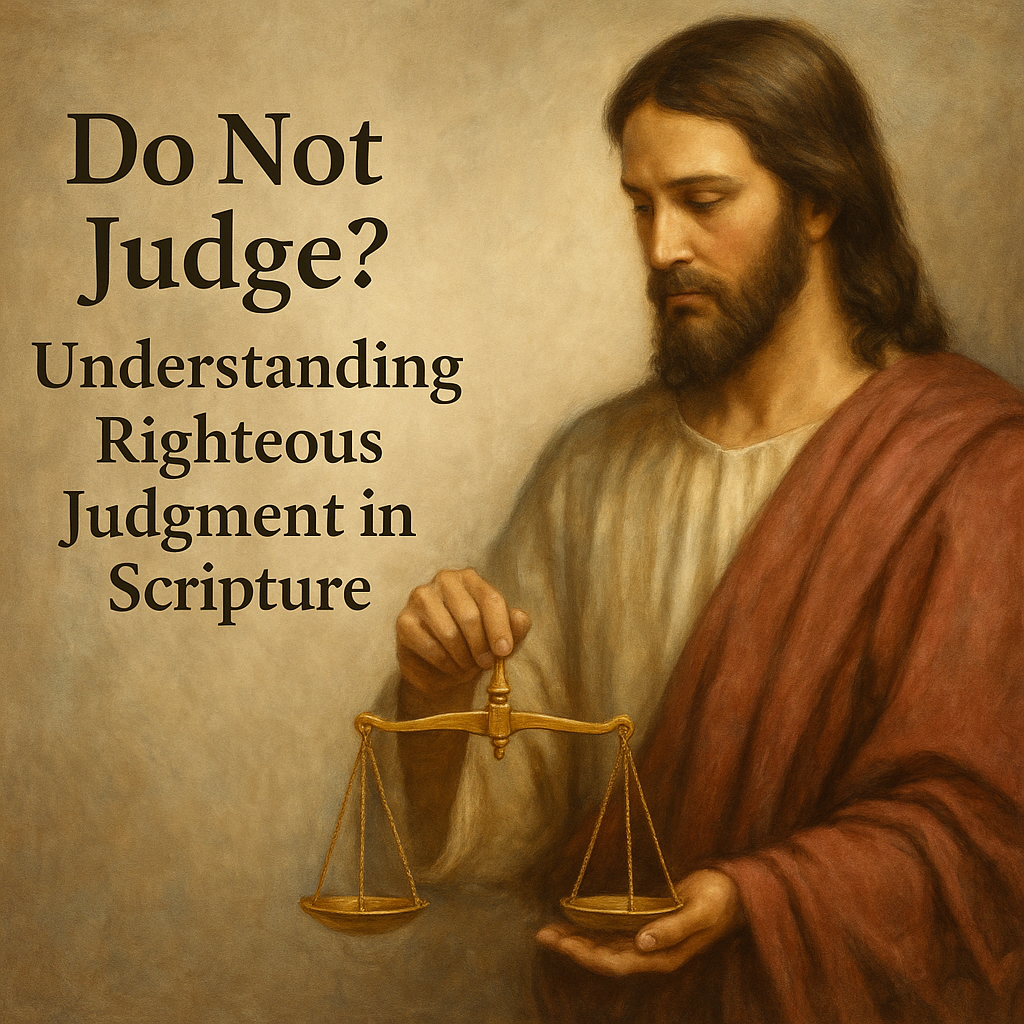
The Misunderstood Command
“Do not judge so that you will not be judged.” (Matthew 7:1)
This is one of the most quoted verses in the Bible, often used to silence correction or confrontation regarding sin. But when we look deeper, we see Jesus was not forbidding all judgment. He was warning against hypocritical judgment—condemning others while ignoring our own sin.
In the very same chapter, Jesus continues:
“First take the log out of your own eye, and then you will see clearly to take the speck out of your brother’s eye.” (Matthew 7:5)
Christ doesn’t forbid helping a brother in sin—He commands us to first purify our own hearts so we can help others righteously, not self-righteously.
The Danger of Fleshly Judgment
Jesus said in John 8:15, “You judge according to the flesh; I am not judging anyone.” Here He rebuked the Pharisees for making superficial judgments based on appearances and legalism. Similarly, Romans 14:10 warns against despising fellow believers over disputable matters, while James 4:11–12 cautions against slander and placing ourselves above God’s law.
Such condemning, prideful, or opinionated judgment is sin. It usurps God’s role as ultimate Judge and does not reflect the humility and mercy of Christ.
We Are Still Called to Judge Rightly
Despite the warnings above, Scripture also commands believers to judge righteously:
- John 7:24 — “Do not judge by appearance, but judge with righteous judgment.”
- 1 Corinthians 5:12–13 — Paul rebukes the church for failing to judge a man in open sin: “Are you not to judge those who are within the church?”
- Galatians 6:1 — We are called to restore one caught in sin “in a spirit of gentleness.”
- 1 Corinthians 2:15 — “He who is spiritual judges all things.”
Righteous judgment is grounded in humility, discernment, truth, and love. It upholds God’s Word while pointing others toward repentance and grace.
Jesus Will Judge—And He Calls Us to Discern
Though Jesus came first to save and not to judge (John 3:17, John 12:47), He is also the appointed Judge of all (John 5:22, Acts 17:31). Until that Day, He calls us to walk in both grace and truth (John 1:17), using discernment to protect the Church from deception, immorality, and false teaching (see Matthew 7:15–20).
Mercy Triumphs Over Judgment
James 2:13 reminds us: “Judgment will be merciless to one who has shown no mercy; mercy triumphs over judgment.” The spirit of our judgment matters. Are we correcting others to feel superior, or to bring life and restoration?
Let us examine our hearts, judge ourselves rightly (1 Corinthians 11:31), and walk in the Spirit. When we speak truth, may it be with compassion. When we correct sin, may it be with tears. And when we warn of judgment, may we also offer the hope of Christ’s mercy.
Conclusion: Judge, But Judge Like Jesus
We are not called to condemn or criticize with fleshly motives, nor to remain silent in the face of sin. Instead, we are called to judge righteously—with humility, love, and discernment.
Jesus does not forbid judgment—He commands it to be done rightly.
Leave a Reply