
Introduction
Throughout Scripture, we see one consistent truth: what is sown in faith is later reaped in abundance. From Abraham’s test on Mount Moriah, to Jesus’ teaching on mercy, to His words about entering into the labor of others, God reveals a principle of giving up in order to gain life. When we connect these truths, we begin to see that Abraham and Isaac’s story was not just a dramatic test of faith, but a prophetic picture of the Father giving His Son for the life of the world — and that as spiritual children of Abraham, we too are called to walk in this pattern of sowing mercy, grace, and self-giving love.
Abraham and Isaac: The Seed of Faith
In Genesis 22, Abraham was asked by God to do the unthinkable: sacrifice his beloved son, Isaac. Scripture tells us Abraham obeyed immediately, carrying Isaac and the wood up the mountain. At the last moment, God provided a ram, sparing Isaac’s life.
But Hebrews 11:19 reveals what was happening in Abraham’s heart:
“He considered that God was able even to raise him from the dead…”
In other words, Abraham had already “given Isaac up” in his heart. His obedience was a sowing — an act of faith that trusted God’s promise even beyond death. Isaac, who carried the wood and submitted without resistance, foreshadowed Jesus Himself.
The Father and the Son: The Fulfillment of the Shadow
What Abraham acted out in shadow, God the Father fulfilled in reality.
Abraham was stopped by God’s mercy. But God did not stop Himself. Romans 8:32 says: “He who did not spare His own Son but gave Him up for us all…”
At Calvary, Jesus carried the wood of the cross as Isaac carried the wood of the altar. But unlike Isaac, Jesus truly became the sacrifice. The Father gave, the Son submitted, and life for the world was sown through the cross.
Sowing and Reaping: The Kingdom Principle
Jesus taught His disciples:
“Blessed are the merciful, for they shall receive mercy.” (Matt. 5:7)
The principle is clear: what you sow into others is what you will reap from God. Mercy, grace, forgiveness, and love cannot be hoarded; they must be given away to be received.
This same principle was embedded in Abraham’s story. By being willing to “give up” Isaac, Abraham sowed faith and obedience — and God multiplied his seed, both physically (the nation of Israel) and spiritually (all who believe in Christ, Gal. 3:7).
“Others Have Done the Work” — Entering the Harvest
In John 4:38, after His encounter with the Samaritan woman, Jesus told His disciples:
“I sent you to reap that for which you did not labor. Others have labored, and you have entered into their labor.”
Who were the “others”?
• The prophets who prepared the way.
• John the Baptist, who called people to repentance.
• Even the Samaritan woman herself, who sowed witness among her townspeople.
And if we look at the big picture — Abraham, Isaac, the patriarchs, the prophets — all of them “labored,” sowing faith through obedience, trials, and even blood. The disciples, and we today, reap the harvest of their sowing.
Life Through Death, Gain Through Surrender
All of these threads come together in one divine truth: life comes through surrender.
• Abraham gave up Isaac in faith, and God gave him descendants as numerous as the stars.
• God gave up His Son, and through Him the world receives eternal life.
• We give up ourselves, sowing mercy, grace, and love, and in return we receive abundant life.
Jesus Himself said:
“Unless a grain of wheat falls into the ground and dies, it remains alone; but if it dies, it bears much fruit.” (John 12:24)
This is the principle of the cross, and it is the principle of the kingdom.
Application: Walking in Abraham’s Footsteps
As Abraham’s children by faith, we are called to the same posture:
• To sow mercy where we might want to hold back.
• To forgive even when we feel wronged.
• To trust God with what is most precious to us.
• To lay down our lives daily so others may see Christ through us.
When we live this way, we are not laboring alone. We are entering into the work of generations before us, and sowing seeds for those who will come after us.
Conclusion
The story of Abraham and Isaac, the sacrifice of Jesus, and His words about reaping where others have sown all harmonize into one truth: God calls His people to give in order to gain, to die in order to live, to sow in order to reap.
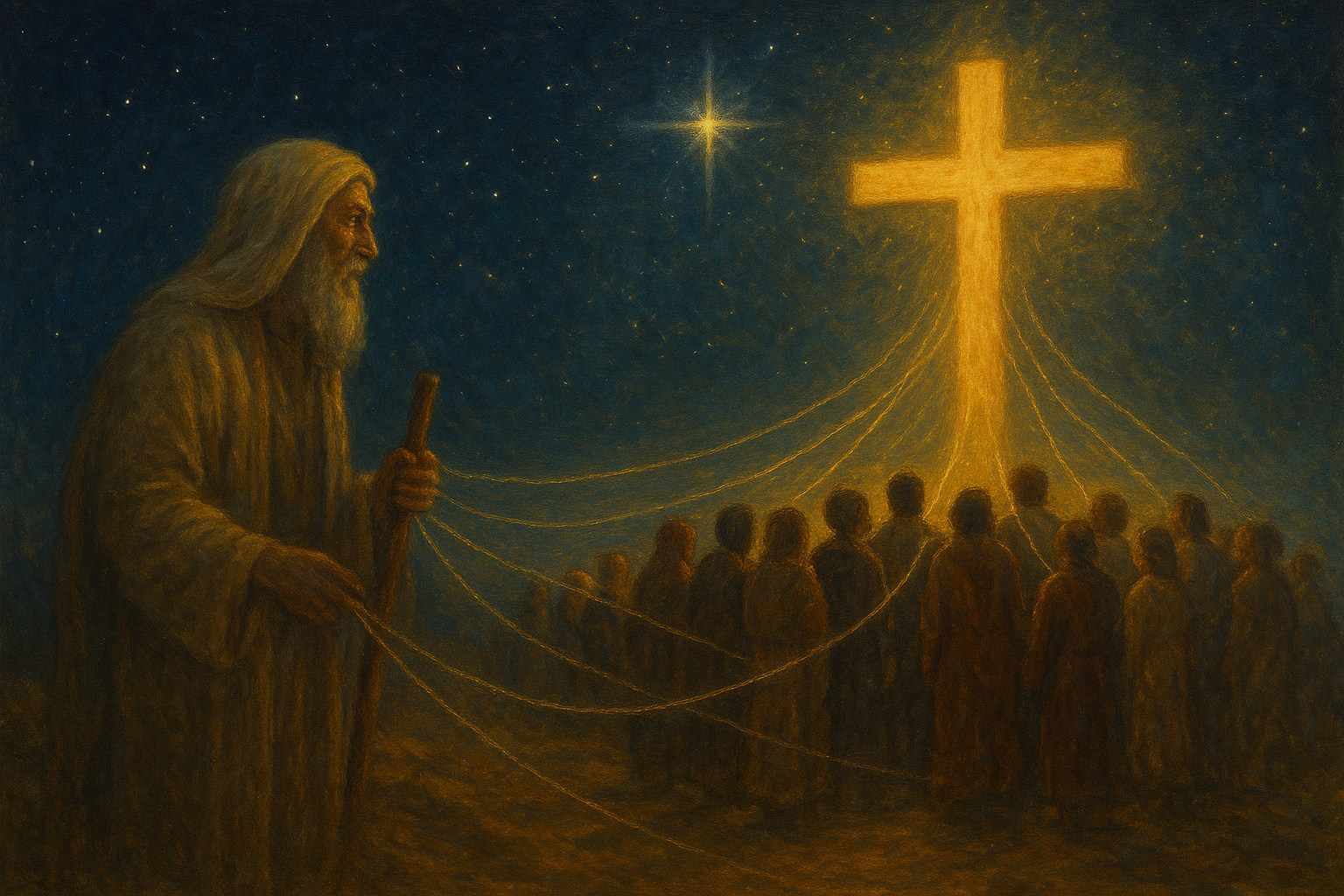
Abraham’s faith, the Father’s gift of His Son, and our own calling to mercy are not separate threads but one woven tapestry. And as we, Abraham’s spiritual children, live out this principle, we find ourselves walking in the same promise — life, and life more abundantly (John 10:10).
Leave a Reply