
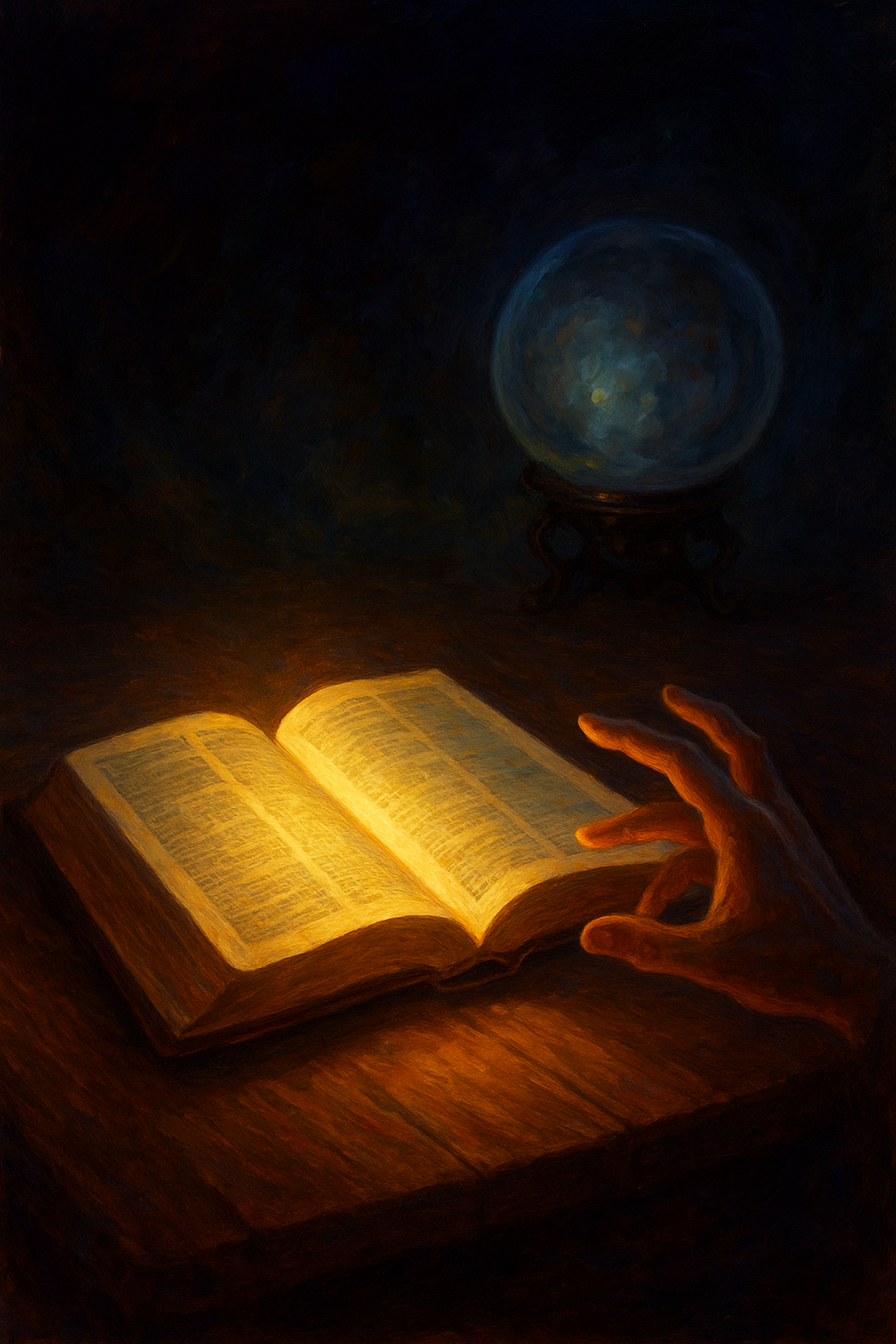
In recent years, the language of “visualization” and “manifestation” has quietly made its way into Christian circles. Phrases like “visualize your breakthrough,” “picture the blessing until it comes,” or “manifest your destiny” sound inspiring, but they are not biblical. Behind these seemingly harmless phrases lies an ancient deception that traces its roots to the occult.
The Occult Roots of Visualization
Visualization as a spiritual practice is not new. In Eastern mysticism, Hinduism, and Buddhist traditions, imagination was believed to be a channel for shaping reality and connecting with spiritual forces. Theosophy, New Thought, and occult magic expanded on this idea, teaching that through the power of the mind, humans could attract energy, wealth, or healing.
Occultists such as Helena Blavatsky and later movements like The Secret promoted visualization as a spiritual law: what you imagine with intensity, you manifest into reality. This teaching was never about trusting God but about replacing Him with the self as the ultimate creator.
How It Masquerades in the Church
Sadly, this same concept has crept into many modern pulpits and Christian self-help books. Under the disguise of faith, visualization has been dressed in Christian terms:
“See yourself healed.” “Picture the promotion until you receive it.” “Imagine the house, and God will provide it.”
Instead of pointing believers to prayerful submission to God’s will, these messages encourage believers to use mental techniques to manipulate reality. While it may sound positive and uplifting, it is nothing more than the occult practice of manifestation cloaked in Christian language.
The Problem with Visualization
The Bible never commands believers to “visualize” their future as a way of bringing it to pass. Instead, it directs us to trust in God’s will and His promises. Jesus taught His disciples to pray:
“Our Father in heaven, hallowed be Your name. Your kingdom come. Your will be done on earth as it is in heaven.” (Matthew 6:9–10)
Notice the focus: not on imagining our will into reality, but on aligning ourselves with God’s will.
Visualization subtly shifts the believer’s gaze away from God’s sovereignty to the self. It becomes an exercise in idolatry, exalting human imagination as a creative force rather than acknowledging God as the Creator and Lord of all outcomes.
The danger is twofold:
It mimics occult techniques—a counterfeit spirituality that invokes principles used in witchcraft and Eastern mysticism. It breeds disappointment and disillusionment—when what was visualized does not come to pass, the believer may question God’s goodness, when in fact, they were never standing on His promises but on a man-made illusion.
The True Power of Prayer
Prayer is not visualization. It is communion with the Father through Christ. It is not about manipulating the universe but about surrendering to the One who rules it. Paul reminds us:
“Do not be anxious about anything, but in everything by prayer and supplication with thanksgiving let your requests be made known to God.” (Philippians 4:6)
The difference is stark: visualization says “I will create my reality.” Prayer says “Lord, let Your will be done in my life.”
Jesus Himself prayed in Gethsemane, “Not My will, but Yours be done” (Luke 22:42). If visualization were God’s method, Christ would have “imagined” the cross away. Instead, He surrendered to the Father’s will for the sake of our salvation.
How to Discern Counterfeits
Believers can guard against occult counterfeits in the Church by asking:
Does this practice depend on Christ and His Word—or on my imagination? Does it lead me to greater submission to God’s will—or to trying to control outcomes? Does it resemble pagan mysticism, occult practices, or secular self-help ideas?
If the practice resembles the techniques of the world more than the teaching of Scripture, it should be rejected.
Conclusion
Visualization and manifestation are not biblical principles. They are occult practices repackaged with Christian vocabulary. Instead of being drawn into the illusion of controlling reality with imagination, believers are called to walk in faith, pray in submission, and trust God’s sovereign hand.
True faith doesn’t demand that God fit into our vision. True faith rests in His vision for us.
As Isaiah 55:8–9 reminds us:
“For my thoughts are not your thoughts, neither are your ways my ways,” declares the Lord.
“As the heavens are higher than the earth, so are my ways higher than your ways and my thoughts than your thoughts.”
Leave a Reply