
“For such men are false apostles, deceitful workmen, disguising themselves as apostles of Christ. And no wonder, for even Satan disguises himself as an angel of light.” (2 Corinthians 11:13–14)
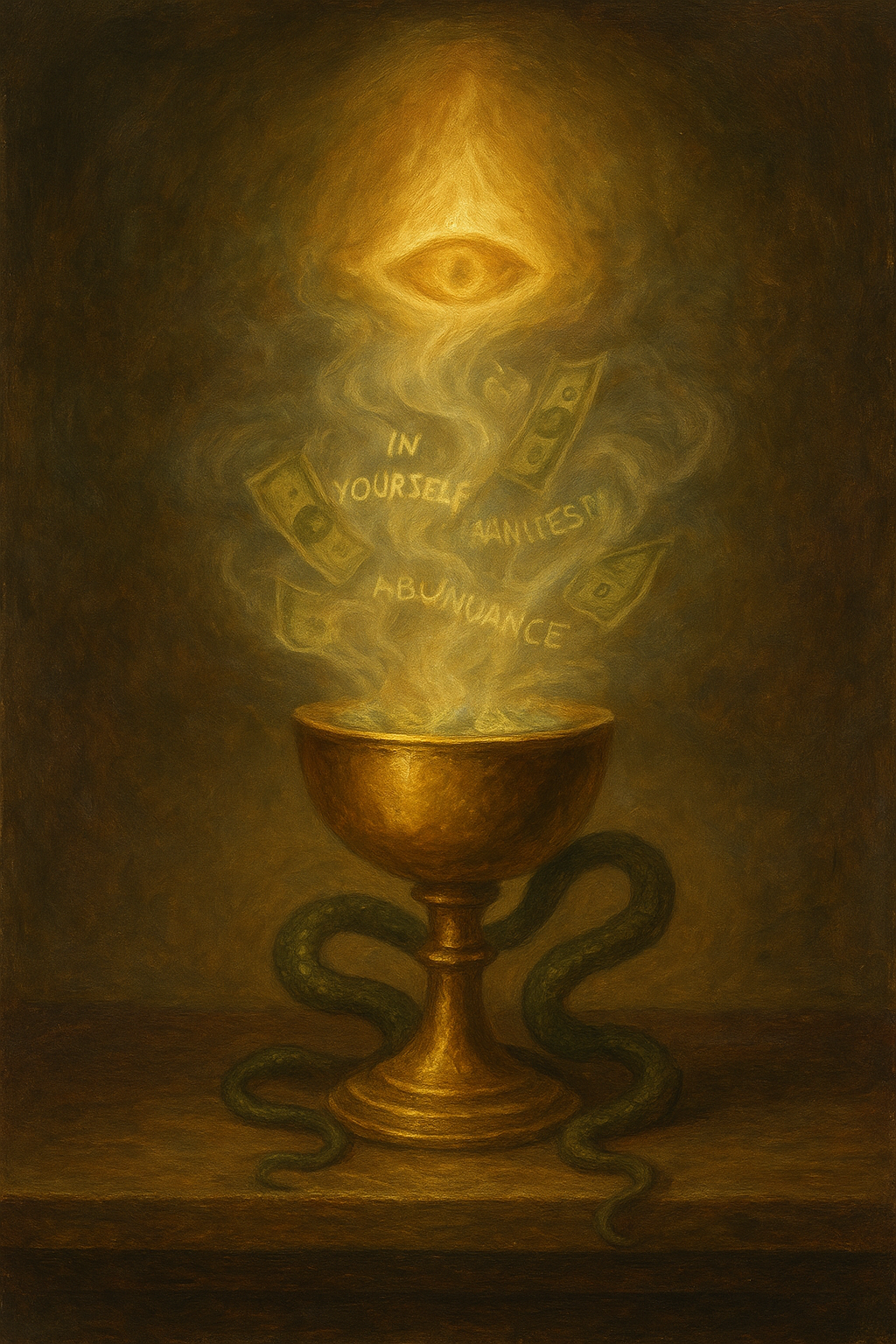
In 2006, The Secret surged into mainstream culture through its book and film, offering what it claimed was a simple path to success: the idea that thoughts, whether positive or negative, create reality through what it called the “law of attraction.” Although it appeared fresh and insightful, its roots run deep into the 19th-century New Thought movement—a blend of Eastern mysticism, occult concepts, and Christian terminology. New Thought denied the biblical, personal God and instead spoke of an impersonal “universe” that responds to human willpower. The Secret repackages these same ideas by teaching that your thoughts and words shape your world, that you are the creator of your reality, and that the universe exists primarily to fulfill your desires. Prayer becomes visualization, God becomes a cosmic servant, and the self becomes sovereign. It is humanism wrapped in spiritual language, a subtle form of man playing god.
The Prosperity Gospel, or Word of Faith movement, emerged from the same stream. Early teacher E.W. Kenyon absorbed New Thought metaphysics and blended them with Pentecostal fervor. His influence shaped the teachings later spread by Kenneth Hagin, Kenneth Copeland, Benny Hinn, Joel Osteen, and many others. This movement takes biblical language and twists it into a formula that claims words possess creative power, faith functions as a force, and God guarantees wealth and health to those who speak and believe strongly enough. Blessing becomes synonymous with financial gain, hardship is treated as a lack of faith, and God is recast as a provider obligated to respond to human declarations. Although the vocabulary sounds Christian, the underlying message mirrors The Secret: your words shape your reality, your desires define God’s purpose, and faith is a tool for personal advancement rather than a posture of humble trust.
Despite their differing language—one speaking of the “universe” and the other of “Jesus”—both movements are driven by the same spiritual deception. They recycle the serpent’s ancient lie in Eden, the promise that “you will be like God” (Genesis 3:5). They elevate human desire over God’s will, center the self rather than Christ, and replace surrender with self-sovereignty. Jesus calls His followers to deny themselves, take up their cross daily, and follow Him, yet these teachings encourage believers to feed the flesh rather than crucify it. Instead of cultivating contentment, they stir covetousness; instead of aiming for holiness, they encourage self-fulfillment; instead of magnifying God’s glory, they magnify man’s gain.
This is dangerous because it leads to idolatry of self, causing people to worship their own desires rather than the God who created them. Scripture teaches that the Lord, not human will, establishes a person’s steps, yet these systems insist the individual is the master of his own destiny. They also present a false view of faith, one that treats faith as a force to manipulate reality rather than trust in God’s sovereign character and purpose. Both movements deny the reality of suffering in the Christian life, even though Scripture teaches that “through many tribulations we must enter the kingdom of God” and that Jesus Himself walked the path of suffering before glory. Moreover, both elevate the pursuit of wealth, comfort, and personal success—a direct contradiction to Jesus’ warning that no one can serve both God and money.
To discern these counterfeits, believers must examine who sits at the center of the message. If a teaching places man, rather than God, on the throne, it is not from the Lord. They must also consider the fruit it produces: whether it leads toward holiness, humility, reverence, and love for God, or toward pride, greed, and obsession with worldly gain. Most importantly, they must measure everything against Scripture and the centrality of the cross. Any message that redefines blessing as material prosperity, treats Scripture as a tool for self-advancement, or bypasses the necessity of repentance and suffering is not the gospel of Christ. Paul warned that people with “itching ears” would seek teachers who appeal to their desires, and both The Secret and the Prosperity Gospel do exactly that by turning spiritual truth into a pathway for personal gratification.
The true gospel stands in stark contrast. It does not promise that God will supply every earthly desire but calls men and women to become like Christ. It is a message of repentance, surrender, and new life through a crucified and risen Savior. True blessing is found not in possessions but in God’s presence, and true faith is not a technique for controlling reality but a wholehearted trust in the sovereign will of the Father. Paul captured this beautifully when he declared, “For to me to live is Christ, and to die is gain” (Philippians 1:21). This gospel leads us away from self-worship and into the joyful surrender of following Christ.
In the end, The Secret and the Prosperity Gospel may appear different, but they flow from the same poisoned root—a spirit that exalts man, denies the cross, and distorts the character of God. Scripture warns believers not to accept every teaching at face value but to “test the spirits” because many false prophets have gone into the world. These teachings are not harmless motivation; they are spiritual counterfeits that lead people away from Christ and toward the idolatry of self. For the sake of truth, holiness, and faithfulness to Scripture, believers must reject these deceptions and cling to the only gospel that saves—the gospel of Jesus Christ, who calls His people not to manifest their dreams but to lay down their lives and follow Him.
Leave a Reply