
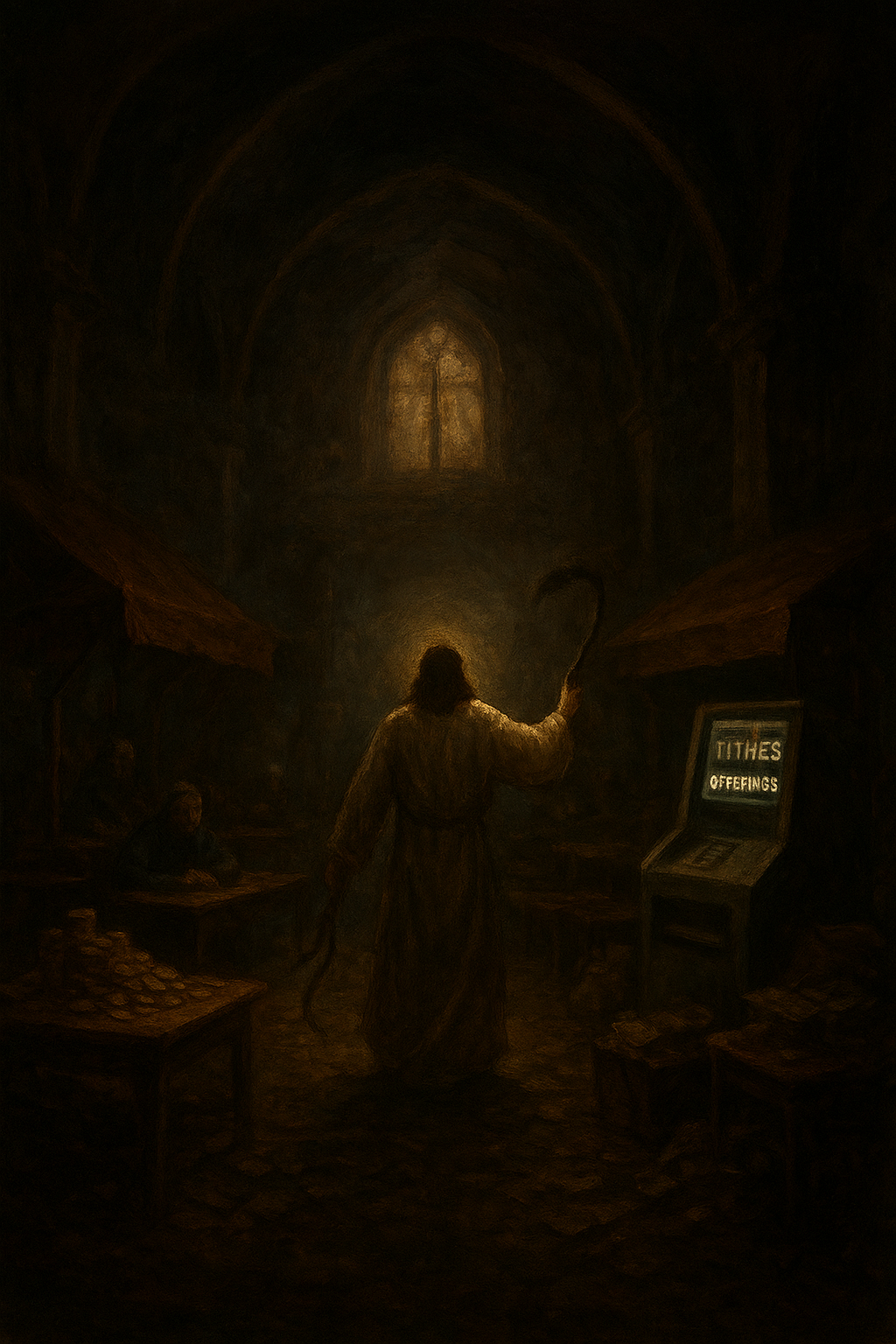
There is a creeping danger in the modern church, one that the prophets of old would have lifted their voices against without hesitation. Israel’s leaders were rebuked for reflecting the nations around them instead of remaining holy, set apart for the Lord. Today, many churches fall into the same snare — measuring themselves by worldly standards, adopting worldly methods, and then baptizing them in religious language.
Let us speak plainly: God never commanded His people to build monuments of brick, glass, and steel and then enslave themselves to the burden of their upkeep. He never commanded ATMs in the lobby of His sanctuary. He never called His house to resemble a shopping mall or a bank. He called His church to be a living temple, a people indwelt by His Spirit, a fellowship of saints devoted to prayer, worship, the Word, and love for one another.
The True Church: A People, Not a Building
The New Testament makes it clear — the church is not a structure but the people of God.
“For where two or three are gathered in My name, there I am among them.” (Matthew 18:20) “You yourselves like living stones are being built up as a spiritual house.” (1 Peter 2:5)
The early believers had no ornate buildings. They met in homes, breaking bread and praying together (Acts 2:42–47). Their power was in their unity and in the presence of God among them, not in mortar and stained glass.
Buildings may serve a purpose, but they are not the essence of the church. When they become the centerpiece, they risk becoming idols.
The Burden of Brick and Mortar
Today, many congregations are shackled to debt. Money that could go to widows, orphans, missionaries, and the poor is poured into mortgages, light bills, and maintenance. A building that was meant to serve people often becomes a master to be served.
The prophets of old would cry out: “Is this the fast that I choose, says the Lord — that you build monuments while the poor go hungry at your gates?” (echoing Isaiah 58). Pride swells when men boast in their cathedrals while the kingdom work of God is neglected.
When the House of Prayer Becomes a Marketplace
We must confront the shameful reality: churches installing ATMs in their lobbies, setting up giving kiosks, and now urging people to send money instantly through Zelle, PayPal, Venmo, and QR codes. Technology itself is not evil — the method of giving is not condemned in Scripture. But what spirit does this reveal?
Jesus overturned the tables of the money changers, declaring: “My house shall be called a house of prayer, but you make it a den of robbers.” (Matthew 21:13). What would He say today to pastors who promote their giving kiosks more than they preach repentance? To leaders who train congregations to swipe and click more eagerly than they disciple them in holiness?
A tool can serve quietly, but when convenience becomes commercialization, when giving becomes as cold as a debit transaction, we risk turning the sacred into the profane.
The Witness to the World
The gospel is holy. It is free. Christ commanded: “You received without paying; give without pay.” (Matthew 10:8). When unbelievers see the church filled with ATMs and constant pleas for digital donations, they do not see the generosity of Christ — they see a marketplace disguised in stained glass.
And they are not wrong to be skeptical. The world already believes the church is greedy and self-serving. These practices confirm their suspicions. Paul warned us: “We put no obstacle in anyone’s way, so that no fault may be found with our ministry.” (2 Corinthians 6:3). Yet when we imitate the culture’s obsession with money, we lay stumbling blocks before the very people we are called to reach.
When Greed Drives the Sheep Away
It is not only unbelievers who stumble at the sight of money changers in the house of God — many believers are being driven away as well. Church members who once came with joy are leaving disheartened, disillusioned, and in some cases abandoning the faith altogether.
Jesus warned that leaders who become stumbling blocks to His little ones would face severe judgment (Matthew 18:6–7). Yet today, entire congregations are weighed down under the burden of financial schemes, building debts, and manipulative fundraising campaigns. Instead of a spiritual family marked by generosity and holiness, many find themselves in an institution that feels more like a business.
Young believers, in particular, are grieved by hypocrisy. They see pastors living in luxury while widows in the same fellowship struggle to pay bills. They see ornate sanctuaries built on millions of dollars in debt while the poor in their own cities go hungry. They hear endless appeals for “sowing seeds” and “giving in faith” while little is ever said about repentance, holiness, or the cross of Christ.
Such practices are planting bitterness in the hearts of the sheep. Hebrews 12:15 warns us not to let “any root of bitterness spring up, causing trouble and defiling many.” Yet the very ones entrusted to shepherd the flock are often the cause of this bitter wound. Instead of drawing people to Christ, greed and corruption are driving them away.
This is why the warning is so urgent. A church obsessed with money does not just damage its own reputation; it crushes the faith of the weak, it hardens the hearts of the searching, and it profanes the holy name of the Lord before the nations.
The Heart of Giving
Scripture is clear about how God desires His people to give:
• Voluntarily: “Each one must give as he has decided in his heart, not reluctantly or under compulsion.” (2 Corinthians 9:7)
• Cheerfully: “God loves a cheerful giver.” (2 Corinthians 9:7)
• Privately: “When you give… do not let your left hand know what your right hand is doing.” (Matthew 6:3)
Giving was never meant to be pressured, paraded, or marketed. It was meant to flow out of love for God and love for neighbor.
A Prophetic Call
The prophets thundered against Israel’s leaders when they led the people into idolatry and greed. If they were here today, would they not raise the same voice against a church that mirrors the world’s obsession with money?
The Spirit still speaks:
Tear down the idols of brick and steel if they enslave you. Stop turning the sanctuary into a business. Feed the sheep; don’t fleece them. Remember that Christ purchased the church with His own blood — not with silver and gold (1 Peter 1:18–19).
Conclusion
The question is not whether ATMs, apps, or buildings are inherently evil. The question is whether they serve the mission of Christ or corrupt it. When the church reflects the world in its obsession with money, greed, and grandeur, it ceases to reflect Christ.
The church is called to be holy, distinct, set apart. The world does not need another business. It does not need another institution obsessed with revenue. It needs a living, breathing body of believers who walk in humility, generosity, and sacrificial love.
Anything less distorts the gospel and brings reproach upon the name of Jesus.
“For the love of money is a root of all kinds of evils. It is through this craving that some have wandered away from the faith and pierced themselves with many pangs.” (1 Timothy 6:10)
Let the modern church hear this warning: repent of greed, turn from worldly methods, and return to the simplicity of Christ.
Leave a Reply