
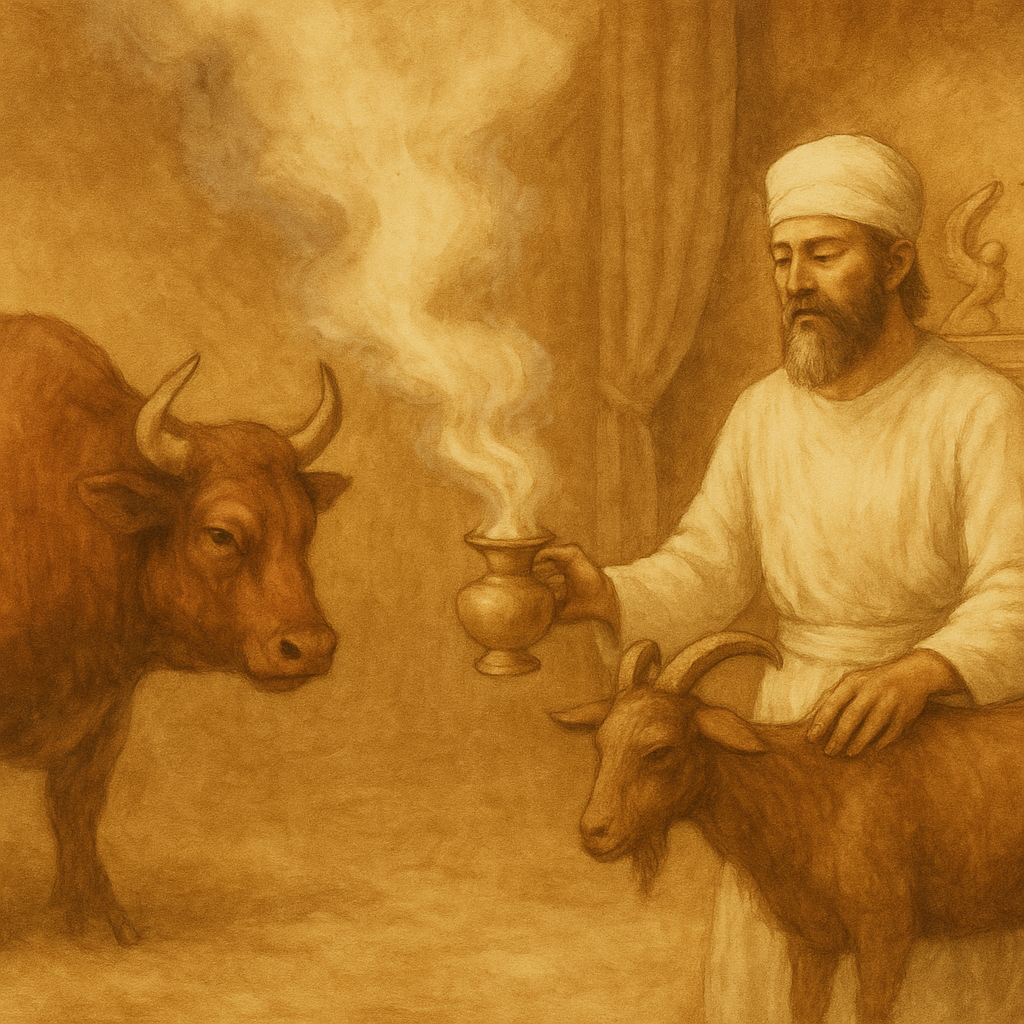
Subtitle: The Sacred Preparations for Yom Kippur in the Torah
Each year on Yom Kippur, the Day of Atonement, the High Priest of Israel would enter the Holy of Holies—the most sacred space within the Tabernacle or Temple—to make atonement for the sins of the nation.
But before he could enter into the direct presence of God, the Torah required him to follow a precise, reverent series of rituals.
Let’s explore what Leviticus 16 reveals about this holy preparation.
🧼 1. Ritual Washing: A Clean Start
Before anything else, the High Priest had to bathe his entire body in water to become ritually clean.
“He shall bathe his body in water and then put them on.” — Leviticus 16:4
This act symbolized spiritual cleansing—before the priest could intercede for others, he had to be made clean himself.
👔 2. Sacred Linen Garments: Humility over Glory
The High Priest normally wore richly decorated garments, but on this day, he wore only simple white linen:
“He shall put on the holy linen tunic and the linen undergarment… They are sacred garments.” — Leviticus 16:4
This showed humility before God, stripping away status and beauty in exchange for purity and surrender.
🐂 3. A Sin Offering for Himself
Even the High Priest was not without sin. He had to offer a bull as a sin offering for himself and his household:
“Aaron shall offer the bull as a sin offering for himself and shall make atonement for himself and for his house.” — Leviticus 16:6
The blood of this bull would later be sprinkled inside the Holy of Holies.
🌫️ 4. Filling the Holy of Holies with Incense
Before applying the blood, the High Priest entered with a censer of burning coals and sweet incense.
“He shall put the incense on the fire before the LORD… so that the cloud of the incense may cover the mercy seat…” — Leviticus 16:13
This smoke shielded the mercy seat, signifying reverence and the mystery of God’s presence.
🐐 5. Atonement for the People: Two Goats
He then took two goats for the people:
One goat was sacrificed, and its blood was brought into the Holy of Holies. The other goat, called the scapegoat, had the sins of the people symbolically placed on it and was sent into the wilderness.
“Then he shall kill the goat of the sin offering that is for the people and bring its blood inside the veil…” — Leviticus 16:15
This act showed both payment for sin and removal of sin.
⚠️ 6. Absolute Isolation: No One Else Allowed
No one else was allowed in the Tabernacle while the High Priest made atonement.
“No one may be in the Tent of Meeting from the time he enters to make atonement until he comes out…” — Leviticus 16:17
This emphasized that only one man could approach God—a foreshadowing of the one Mediator to come.
🩸 7. Sprinkling the Blood
The High Priest sprinkled the blood of both the bull and the goat on and in front of the mercy seat—seven times.
This was the central act of atonement.
💧 8. Final Cleansing and Burnt Offerings
After completing the inner rituals, the High Priest would bathe again, change back into his normal High Priest garments, and offer burnt offerings for both himself and the people.
🔥 9. Sin Offerings Burned Outside the Camp
The bodies of the bull and goat used as sin offerings were taken outside the camp and completely burned:
“And the bull for the sin offering and the goat for the sin offering… shall be carried outside the camp…” — Leviticus 16:27
This represented complete separation from sin.
🧭Final Thoughts: The Shadow of the Greater High Priest
These rituals were sacred shadows—a powerful image of what Jesus would ultimately fulfill.
“But when Christ appeared as a high priest… He entered once for all into the holy places… by means of His own blood, thus securing an eternal redemption.” — Hebrews 9:11–12
Just as the High Priest had to enter with humility, sacrifice, and blood, Jesus entered the heavenly Holy of Holies with His own blood—once for all.
🙏 May we approach with reverence and joy, knowing that through the ultimate High Priest, we now have access to God Himself.
Leave a Reply