
For many believers today, the phrase “Do not forsake the assembling of ourselves together” has been reduced to little more than a rule about attending a church building every Sunday. Missing a service is often viewed as spiritual neglect, disobedience, or a sign that someone’s faith is slipping. But when we step back and look carefully at the entire story of Scripture—from the earliest patriarchs, through the ministry of Jesus, into the life of the early church—we discover that God’s desire has never centered on buildings, rituals, or institutional loyalty. His heart has always rested on sincere worship, authentic fellowship, and faithful obedience. What God longs for is a people who seek Him in truth, love one another deeply, and walk in holiness—not people who simply fulfill religious expectations out of guilt or habit. This expanded reflection explores the richness of biblical worship and community, inviting us to see the church not as a place we attend, but as a life we embody.
When we begin with the earliest chapters of Scripture, long before temples or synagogues existed, we find men and women who walked with God in a deeply personal way. Abraham built altars in the wilderness as acts of devotion. Noah worshiped not with weekly ceremonies but by living in obedience to God’s voice in a generation filled with wickedness. Moses encountered God not in a building but in a burning bush, on a mountain, and in the quiet place of intercession. The prophets—Elijah, Elisha, Isaiah, Jeremiah, and others—carried their ministries through seasons when true worship had all but disappeared from Israel. Their faithfulness did not depend on weekly temple gatherings or elaborate services. It was rooted in obedience, surrender, prayer, devotion, and holiness. Their lives reveal a profound truth: God has never confined His presence to a location, and He has never measured worship by attendance. Scripture consistently shows that the heart of worship has always been the heart itself.
Jesus reinforced this truth with unmistakable clarity when He spoke with the Samaritan woman at the well. She was preoccupied with the question of where worship should occur—whether on the mountain of her ancestors or in Jerusalem. But Jesus cut through centuries of religious debate by teaching that the Father seeks those who worship in spirit and in truth. Worship, according to Jesus, is not about geography or architecture. It is not tied to a specific mountain, building, or tradition. It is rooted in sincerity, purity, humility, and the inward work of the Spirit. True worshipers come to God with honesty, not performance; with repentance, not pretense; with faith, not formality. This is the worship the Father desires, and it transcends every earthly structure.
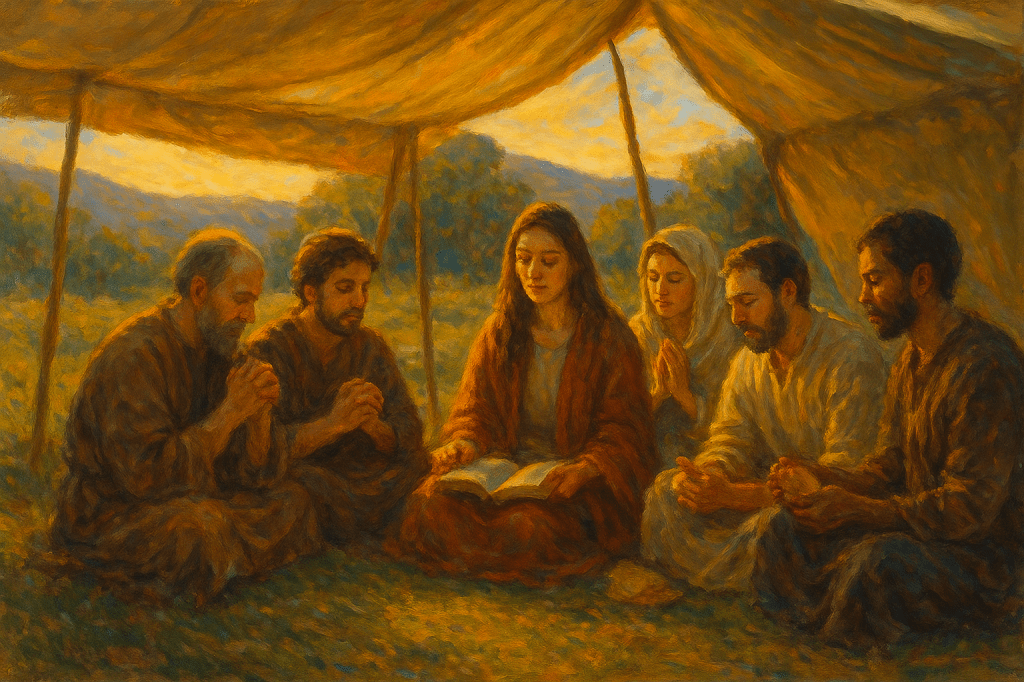
In the same way, Jesus defined fellowship with surprising simplicity. He said that where even two or three gather in His name, He is present among them. This promise does not require a crowd, a sanctuary, a stage, or a formal program. It requires only a few believers whose hearts are united in His name and who desire to seek Him together. Fellowship in the biblical sense is not a weekly schedule of events but a shared life shaped by prayer, accountability, encouragement, honesty, and spiritual growth. It is the kind of gathering where believers open Scripture together, confess sins to one another, bear one another’s burdens, and stir one another toward love and good works. In such settings, Christ—not a structure, not a personality, not an institution—is truly the center.
This understanding aligns perfectly with the life of the early church. Hebrews 10:24–25, a passage often used today as a warning against missing a church service, originally spoke to believers gathering in homes, often in secrecy and under threat. They met in living rooms, courtyards, upper rooms, and by riverbanks. They broke bread from house to house. They prayed in small groups. They faced persecution, poverty, and hardship together. When the writer of Hebrews urged them not to forsake assembling, he was encouraging them not to pull away from the Christian community entirely out of fear or discouragement. It was a call to mutual support, perseverance, and encouragement—not a command to attend a particular building at a particular hour every week. The heart of assembling was—and is—genuine connection, shared faith, and spiritual support.
Today, many believers wrestle with discomfort or grief over the state of certain church environments. Some congregations elevate entertainment over holiness, minimize or distort Scripture, or shape their teaching according to cultural pressure rather than biblical truth. Paul warned that a time would come when people would not endure sound doctrine but would seek teachers who tell them what they want to hear. When pulpits compromise truth or replace conviction with comfort, gatherings lose their power and believers are left spiritually hungry. Sitting under teaching that reinterprets or disregards the Word of God is not harmless; it can dull discernment, weaken faith, and lead hearts astray. In these moments, Christ’s assurance that two or three gathered in His name are enough becomes a lifeline of hope. Faithfulness to the truth matters far more to God than the size of a crowd or the prestige of a gathering.
The teachings of Jesus in Matthew 6 further highlight what God values in worship. Giving, prayer, fasting, and devotion must flow from sincerity rather than performance. Jesus called His followers away from praying for attention, giving for applause, or practicing righteousness for display. The Father sees in secret, and He weighs motives more heavily than actions. A believer attending a gathering out of guilt or routine is no different than someone praying loudly in the streets simply to be noticed. Worship that is forced or performed has no spiritual life in it. God desires hearts that seek Him out of love, not obligation; joy, not pressure; conviction, not coercion. The same principle applies to assembling with other believers. The value of gathering comes from the spiritual integrity of it—not the number of people present or the formality of the setting.
Throughout Scripture, God reveals again and again that His true dwelling place is not a building but His people. When David longed to build a permanent temple, God gently reminded him that He had never asked for one—He had chosen to dwell among His people wherever they went. This message reaches its fulfillment in Christ, who became the cornerstone of a spiritual house made not of stone but of living believers. Jesus referred to His own body as the true temple. When He died and rose again, the veil was torn, access to God was made personal, and the presence of God no longer rested in a physical place but within the hearts of His people. When the physical temple was destroyed in A.D. 70, the entire system of temple-based worship came to its final end. Through Christ, and by the Spirit, the people of God themselves became the dwelling place of God. The church is not a location—it is a living, breathing body made of redeemed souls across the world.
Jesus made this even clearer in His teaching about the final judgment. On that day He will not commend anyone for maintaining buildings or attending services regularly. He will commend those who loved in His name—who fed the hungry, welcomed the stranger, clothed the poor, cared for the sick, and visited the imprisoned. These are the works of mercy and compassion that reflect His heart. Structured gatherings can serve important purposes, but they were never meant to overshadow the weightier matters of justice, mercy, and faithfulness. When buildings or programs consume more passion and resources than caring for people or living out Christ’s commands, our priorities have drifted from the heart of God.
Some believers today gather outside traditional church settings due to past wounds, spiritual danger, compromised teaching, or personal conviction. Many pray fervently, study Scripture deeply, pursue holiness sincerely, and gather with one or two others for worship, prayer, and encouragement. These believers are not forsaking the assembly—they are living out the very definition Jesus gave. Elijah once believed he was alone, but God reminded him that He had preserved a faithful remnant. Today, God continues to preserve a remnant who will not bow to cultural idols, compromise Scripture, or trade genuine fellowship for tradition or applause.
Wherever believers gather—with only two or three present—Christ is in the midst of them. That is church. That is fellowship. That is the narrow path of sincere discipleship. From Abraham to the prophets, from Jesus to the apostles, from the early church to today, Scripture proclaims a unified truth: God desires hearts more than habits, devotion more than routine, faithfulness more than form. The true church is a people, not a place; a body, not a building; a living temple, not an institution. Whether believers gather in a home, in a field, around a table, or in a small circle of prayer, Christ Himself is present with them.
Let us therefore live as the house of God—people shaped by His presence, strengthened by His Word, and devoted to love, purity, and obedience. Let us pursue worship that springs from the heart, fellowship that is genuine and Spirit-led, and faithfulness that endures. And let us walk together in hope until the day He returns, when every earthly structure will fade and only what is true, eternal, and rooted in Christ will remain.
 Feeding the Flock Ministry
Leave a comment