
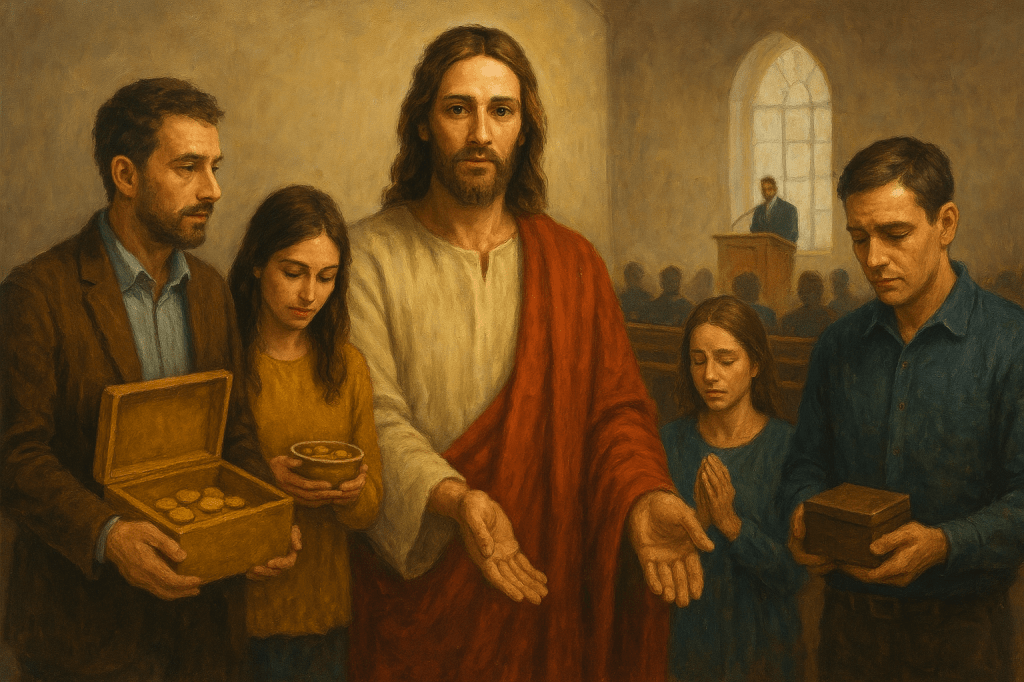
When Jesus told the parable of the three servants in Matthew 25, He was not merely offering a lesson on productivity or religious diligence but unveiling a profound truth about the human heart, revealing how every generation of believers responds to what God entrusts to them. The master placed his possessions into the hands of his servants, giving each according to their ability, and the two who loved him invested what they were given with joyful readiness while the one who feared him buried his gift in the ground and waited for his return. Jesus shows us that the difference between the faithful and the fearful is not the size of the gift but the posture of the heart. In the same way today’s believers fall into these same patterns—some stepping forward in devotion, some shrinking back because of fear—and the church becomes a living example of this ancient story. Every spiritual gift, every moment of influence, every resource, every opportunity to serve, teach, give, or encourage is a “talent” entrusted to us by Christ until He returns.
In Scripture, Jesus consistently used stories about stewardship, fruitfulness, and responsibility to teach that faith is not passive, and the parable of the talents fits into that larger theme woven throughout His ministry. In the parable of the minas in Luke 19, the servants were told to “do business until I come,” making it clear that God expects His people to act, move, risk, and invest the gospel in the world rather than protect it behind walls of comfort or complacency. He taught that a lamp is never meant to be hidden under a basket but placed on a stand so that others may see the light, showing that every believer carries something meant to be visible, influential, and life-giving. And in the parable of the sower, He revealed that the heart determines the fruit: good soil produces thirty, sixty, and a hundredfold, not because of the talent of the seed but the receptivity of the soul. When these teachings are read together, they form a single, unified call—God deposits something in every believer, and He expects that deposit to become fruitful through faith-driven action.
The Old Testament echoes this same message with remarkable consistency. God’s words through Moses in Deuteronomy urged Israel to remember that everything they possessed—strength, wisdom, land, provision—was given by Him so that they would steward it well and walk in obedience. Through the prophet Jeremiah, God rebuked His people for turning away from the work He gave them, saying they had forsaken the fountain of living waters and tried to carve out their own broken cisterns, a vivid reminder that faithfulness requires using what God provides rather than burying it out of fear or apathy. The prophet Malachi confronted the people for withholding what belonged to God, not simply in tithes but in devotion, trust, and obedience, showing again that the issue was always the heart rather than the amount. Whether in the Torah, the prophets, or the teachings of Jesus, God consistently calls His people to active, faithful stewardship grounded in love rather than fear.
In today’s church the two faithful servants are seen in believers who, often without fanfare, use what God has entrusted to them because their love for Christ outweighs their fear of failure. These are the men and women who teach a small Bible study even when only a few people show up, trusting God to multiply what feels insignificant. They are the ones who take time to disciple a coworker, share the gospel with a neighbor, or encourage the discouraged with quiet consistency. They are the prayer warriors who rise early to intercede for their church, the families who open their homes for fellowship, the young adults who serve in unnoticed roles, and the elderly saints who pour out wisdom from a lifetime of walking with God. They use what they have, not because they think it is impressive, but because they trust the Master and long for His joy. Their lives reflect the faithfulness of the servants who brought back more than what they were given, receiving the blessing of hearing “Well done.”
But the fearful servant is just as present in the modern church. This believer may love God but views Him more as a harsh taskmaster than a gracious Father, and therefore hides what has been entrusted to them. They feel unqualified to teach, so they never try. They worry about being rejected, so they never speak of Christ to others. They fear the criticism of people, so they never step into the ministry God is nudging them toward. Some bury their gifts under routines, distractions, or the pursuit of a safe and quiet Christian life that never risks anything for the kingdom. Others bury their calling under insecurities—believing their voice does not matter, their resources are too small, or their past disqualifies them from being used by God. But Jesus’ parable reveals that burying the gift is not humility; it is unbelief. The Master would have accepted even the smallest return, because faithfulness, not success, is what He requires.
When we place Jesus’ teachings side by side—from the talents to the minas, from the sower to the lampstand—and when we listen again to the voices of Moses and the prophets, a single truth emerges with clarity: God gives every believer something of eternal value, and He expects them to use it. No gift is too small, no calling insignificant, no believer exempt. The church today stands at the same crossroads as the servants in the parable, faced with the question: Will we act in love or shrink back in fear? Will we invest what God has given us for His glory, or will we bury it beneath excuses, anxieties, and worldly distractions? Jesus’ warning is sobering, but His promise is greater—those who step forward in faith, even with trembling hands, will share in the joy of their Master. And in that day the only thing that will matter is whether we used what He placed in our hands for the good of His kingdom and the glory of His name.
 Feeding the Flock Ministry
Leave a comment