
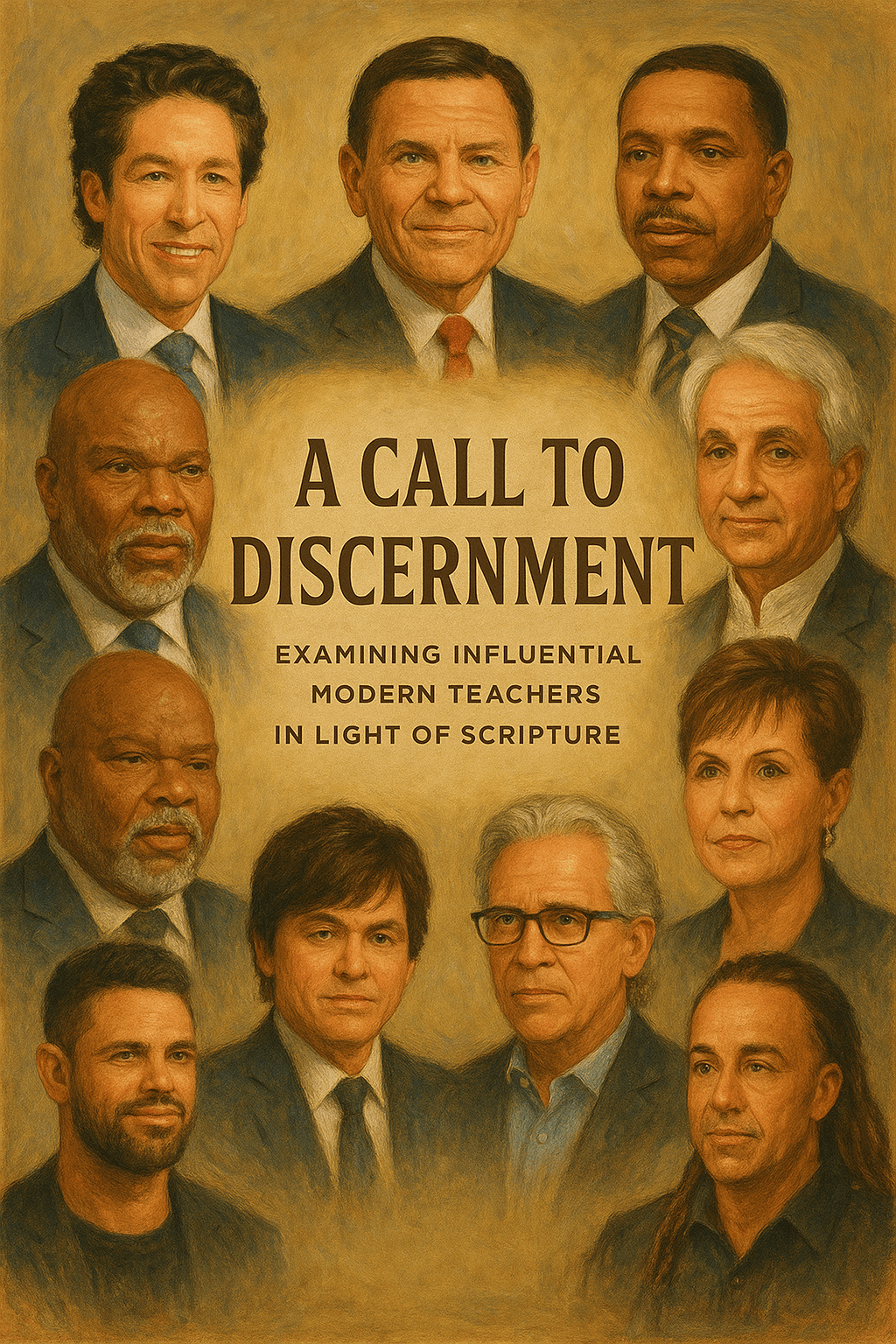
Examining Influential Modern Teachers in Light of Scripture
Throughout the history of God’s people, seasons of spiritual hunger have often coincided with seasons of spiritual confusion. Scripture repeatedly warns that false teaching does not usually appear hostile, ugly, or overtly anti-Christian. Instead, it often arrives clothed in success, compassion, charisma, and apparent fruitfulness. Jesus warned that false prophets would come in sheep’s clothing while inwardly being ravenous wolves, and He cautioned that many would travel a broad and popular path while only a few would walk the narrow way that leads to life.
The New Testament makes clear that discernment is not a secondary concern reserved for theologians. It is a core responsibility of every believer. Paul instructed the church to examine everything carefully and hold fast to what is good, while John warned believers to test the spirits to see whether they are from God. These commands assume that false teaching will not always be obvious, and that spiritual sincerity alone is not a safeguard against deception.
This article examines several highly influential modern pastors and teachers whose doctrines have shaped global Christianity through television, publishing, conferences, and digital media over the last several decades. The purpose is not to judge personal motives, spiritual sincerity, or eternal standing before God. Scripture forbids such judgment. The purpose is to test teaching, as believers are commanded to do, and to compare doctrine carefully with the full counsel of God.
The Authority of Scripture: The Final Measure of Truth
Before any evaluation of doctrine can be meaningful, the question of authority must be settled. Scripture presents itself as God-breathed, sufficient, and final for faith and practice. Paul taught that Scripture equips the believer for every good work, leaving nothing essential lacking. This means that no spiritual experience, prophetic impression, church growth metric, or personal testimony carries authority equal to or above the written Word of God.
Throughout church history, theological error has most often entered not through open rejection of Scripture, but through subtle displacement of Scripture’s authority. When experiences interpret the Bible rather than the Bible interpreting experiences, discernment collapses. When inner impressions are treated as divine guidance without scriptural testing, subjectivity replaces truth. Scripture does not deny that God guides His people, but it consistently subjects all guidance to the written Word He has already given.
For this reason, all teachings discussed in this article are measured not against personal preference, denominational tradition, or emotional effect, but against Scripture interpreted in its plain, contextual, grammatical-historical sense.
Defining “Unbiblical Teaching”
For clarity, the term unbiblical in this article does not mean “different from my tradition” or “stylistically unappealing.” It refers to teaching that is inconsistent with the plain, contextual, grammatical-historical meaning of Scripture, contradicts central doctrines clearly taught in the Bible, or undermines truths historically affirmed by orthodox Christianity across centuries.
Scripture itself establishes this standard. Believers are commended in Acts for examining the Scriptures daily to see whether teaching is true. Paul warns in Galatians that even an angelic message must be rejected if it proclaims a different gospel. Doctrine is not validated by popularity, emotional impact, or visible success, but by faithfulness to what God has revealed.
A Necessary Distinction: Error, Immaturity, and False Gospel
Not all doctrinal errors are equal. Scripture distinguishes between immature teaching, serious error, and teachings that fundamentally distort the gospel itself. Paul explains that some build poorly on the foundation of Christ, while others preach a message so corrupt that it is no gospel at all.
This article does not claim that every individual discussed teaches outright heresy at every point, nor that every sermon they preach is false. Rather, it identifies consistent patterns of teaching that, over time, reshape the Christian faith into something Scripture does not present. Patterns matter because repeated emphasis forms belief, and belief shapes lives.
The Biblical Gospel: The Standard of Comparison
Before examining specific teachers, it is essential to restate the gospel clearly.
The Bible teaches that God is holy and righteous, that humanity is fallen and separated from Him by sin, and that no amount of moral effort, positive thinking, or faith techniques can reconcile us to God. Jesus Christ, fully God and fully man, lived a sinless life and offered Himself as a substitutionary sacrifice on the cross, bearing the penalty for sin. His atoning work was completed at the cross, as He declared before His death.
Salvation is received by grace alone through faith, accompanied by repentance, resulting in justification, ongoing sanctification, and eventual glorification. While God blesses His people in many ways, Scripture never promises earthly comfort, wealth, or health as guarantees of faithfulness. Instead, it promises forgiveness, new life, conformity to Christ, and the hope of resurrection—often through suffering rather than escape from it.
This gospel, not personal success or spiritual experience, is the measure against which all teaching must be tested.
Shared Responsibility: Teachers and Hearers
While Scripture speaks sternly about false teachers, it also places responsibility on hearers. Paul warned that a time would come when people would accumulate teachers who tell them what they want to hear. This does not excuse deceptive teaching, but it does acknowledge that deception often succeeds because it satisfies human desires for comfort, control, affirmation, or spiritual excitement.
Believers are never portrayed in Scripture as passive consumers of spiritual content. They are called to grow in discernment, to mature in understanding, and to be anchored in truth. When believers neglect Scripture, avoid correction, or equate emotional resonance with truth, they become vulnerable to teaching that sounds spiritual but lacks biblical substance.
The Missing Fear of the Lord: Reverence Replaced by Familiarity
One of the most consistent threads running through the teachings examined in this article is not merely doctrinal imbalance, but a deeper absence: the biblical fear of the Lord. Scripture presents the fear of the Lord not as terror alone, but as reverent awe, humility, submission, and recognition of God’s absolute holiness and authority. It is repeatedly described as foundational to wisdom, obedience, and sound teaching.
The book of Proverbs teaches that the fear of the Lord is the beginning of wisdom. Isaiah records that the Messiah Himself would delight in the fear of the Lord, showing that reverence is not a weakness but a mark of spiritual maturity. When fear of the Lord diminishes, theology inevitably shifts from God-centered to man-centered, from submission to control, from worship to utility.
In many modern teaching platforms, God is spoken of casually, confidently claimed, and frequently invoked as the guarantor of personal desires, visions, or ambitions. His holiness is softened, His sovereignty domesticated, and His authority reframed as partnership on human terms. Scripture, however, consistently portrays encounters with the living God as humbling, sobering, and transformative.
Isaiah, upon seeing the Lord high and lifted up, did not declare his potential or destiny; he confessed his uncleanness. Job, after hearing God speak, did not claim victory but repented in dust and ashes. John, the beloved disciple, fell as though dead when he saw the risen Christ in glory. These responses reveal that true nearness to God produces reverence, not casual confidence.
Fear of the Lord Versus Fearlessness Toward God
Many of the teachings addressed in this article promote a kind of spiritual fearlessness that Scripture does not endorse. Believers are encouraged to command, declare, decree, and claim outcomes with little emphasis on submission to God’s will or trembling before His holiness. Yet Scripture never presents boldness as independence from God; it presents boldness as confidence grounded in obedience and humility.
The New Testament repeatedly warns against irreverence. Paul cautioned believers not to think more highly of themselves than they ought. Hebrews reminds the church that our God is a consuming fire and urges believers to offer service with reverence and awe. Jude warns against teachers who treat spiritual realities lightly, speak arrogantly about heavenly things, and lack restraint in both doctrine and conduct.
When fear of the Lord is absent, correction is resisted, accountability is minimized, and success is interpreted as divine approval. Scripture, however, teaches that God disciplines those He loves and that not all growth is healthy growth.
Even Demons Acknowledge What Many Teachers Minimize
Scripture makes a sobering comparison that cannot be ignored. James writes that even demons believe that God is one—and they shudder. This statement is not meant to elevate demons, but to warn humans that intellectual belief or verbal affirmation without reverence is insufficient.
Fallen angels, though rebellious, do not treat God casually. They recognize His authority, His power, and His judgment. Throughout Scripture, demonic beings respond to Jesus not with familiarity, but with fear, recognizing who He is even when humans do not. They know His name, His authority, and their ultimate defeat.
The tragedy is that some modern teachers speak of God with less awe than demons do. They invoke His name freely while reshaping His character, claim His authority while redefining His will, and promise His blessings while minimizing His holiness. This does not reflect intimacy with God; it reflects presumption.
Presumption speaks where reverence would be silent. It declares where fear would pray. It commands where fear would submit.
Fear of the Lord as a Safeguard Against False Teaching
Biblically, fear of the Lord functions as a guardrail. It restrains speech, tempers ambition, and submits creativity to obedience. Teachers who fear the Lord tremble at the thought of misrepresenting Him. They handle Scripture carefully, avoid exaggeration, and resist the temptation to say more than God has said.
By contrast, teaching that is driven by platform-building, constant novelty, emotional escalation, or untestable claims almost always reveals a diminished fear of the Lord. When the desire to inspire outweighs the desire to be accurate, when experiences outweigh Scripture, and when success silences correction, the fear of the Lord has already eroded.
Scripture warns that teachers will be judged more strictly. This warning only makes sense if teaching God’s Word is a sobering responsibility, not a performance or brand.
A Call Back to Reverence
The solution to doctrinal distortion is not cynicism, nor withdrawal, nor perpetual outrage. It is a return to reverence. A church that fears the Lord will value truth over trend, faithfulness over fame, and holiness over hype. It will measure success not by crowds or revenue, but by conformity to Christ.
Fear of the Lord does not diminish love; it purifies it. It does not suppress joy; it deepens it. It does not silence faith; it anchors it.
Where the fear of the Lord is restored, Scripture regains its weight, repentance regains its place, and the gospel regains its power.
1. Joel Osteen: Encouragement Without Repentance
Joel Osteen rose to prominence after assuming leadership of Lakewood Church in 1999, quickly becoming one of the most recognizable Christian communicators in the world. His messages emphasize positivity, self-worth, and personal improvement, resonating widely with both Christian and secular audiences.
The primary concern with Osteen’s teaching is not overt doctrinal denial, but systematic omission. Scripture presents repentance as essential to the gospel. Jesus began His ministry calling people to repent, and the apostles consistently preached repentance alongside faith. In contrast, Osteen’s sermons rarely address sin as rebellion against God, the necessity of repentance, or the cost of discipleship described by Jesus as self-denial and cross-bearing.
Suffering in Scripture is portrayed as a means God uses to refine His people, yet Osteen’s framework often treats hardship primarily as an obstacle to personal fulfillment. Over time, this produces a version of Christianity centered on emotional uplift rather than transformation through the cross.
2. Kenneth Copeland: Faith Recast as a Spiritual Law
Kenneth Copeland is one of the most influential figures in the Word of Faith movement, which developed in the mid-twentieth century and drew heavily from metaphysical and New Thought concepts filtered through Christian language.
Copeland teaches that faith is a force governed by spiritual laws and that spoken words activate creative power. Scripture, however, presents faith as trust in the sovereign God who alone creates and sustains reality. Isaiah emphasizes that God alone declares the end from the beginning, and Hebrews presents faith as reliance on God’s promises, not manipulation of spiritual mechanics.
The teaching that believers are “little gods” further erodes the Creator–creature distinction foundational to biblical theology. While humans bear God’s image, Scripture consistently affirms that God shares His divine nature with no one. When faith becomes a technique and words become tools of control, prayer shifts from humble submission to attempted sovereignty.
3. Creflo Dollar: Prosperity as Proof of Faith
Creflo Dollar’s ministry has been a major voice in prosperity theology, teaching that financial abundance and physical well-being are covenant rights for believers.
Scripture never presents wealth as a guaranteed outcome of faith. Jesus warned that devotion to wealth competes with devotion to God, and Paul cautioned that the desire to be rich leads many into spiritual ruin. The New Testament repeatedly portrays faithful believers enduring hardship, poverty, and suffering without suggesting that these conditions reflect deficient faith.
By equating blessing with material success, prosperity teaching subtly redefines God’s favor and places unbearable guilt on believers who suffer.
4. Benny Hinn: Healing, Claims, and Biblical Testing
Benny Hinn became globally known through healing crusades marked by dramatic claims of supernatural intervention. Scripture affirms that God heals, but it also establishes clear standards for evaluating prophetic and healing claims.
Biblical healing serves to glorify God and authenticate truth, not to build platforms or create spectacle. Scripture records faithful believers who were not healed and apostles who acknowledged ongoing sickness. When healing is portrayed as guaranteed and failure is attributed to insufficient faith, suffering believers are burdened rather than shepherded.
5. Joyce Meyer: Atonement and Word of Faith Influence
Joyce Meyer’s early teaching reflected strong Word of Faith theology, including claims that Jesus completed redemption through suffering in hell. Scripture consistently locates the completion of atonement at the cross, where Christ declared His work finished.
While Meyer later clarified aspects of her teaching, these earlier ideas remain widely circulated. Any teaching that diminishes the sufficiency of the cross undermines the heart of the gospel.
6. T.D. Jakes: Trinitarian Clarity and Confusion
T.D. Jakes rose to prominence through preaching and media influence and was historically associated with Oneness Pentecostal theology, which denies the biblical doctrine of the Trinity.
Scripture reveals one God in three distinct persons, seen clearly at Jesus’ baptism and in the Great Commission. While Jakes has used Trinitarian language in later years, ambiguity remains. Scripture calls leaders to teach sound doctrine clearly, not vaguely, especially on foundational truths.
7. Steven Furtick: The Shift Toward Self-Centered Interpretation
Steven Furtick represents a modern preaching style that is emotionally engaging and culturally resonant. However, his sermons often place personal identity and self-empowerment at the center of biblical narratives.
Scripture consistently places Christ, not self-discovery, at the center of God’s revelation. When believers are encouraged to see themselves as the primary focus of Scripture, the gospel becomes therapeutic rather than redemptive.
8. Joseph Prince: Grace Without Transformation
Joseph Prince emphasizes grace as freedom from condemnation, often reacting against legalism. However, his teaching frequently minimizes repentance, confession of sin, and sanctification.
Scripture teaches that grace not only forgives but instructs believers to deny ungodliness and live righteously. Faith that produces no transformation is repeatedly warned against.
9. Bill Johnson: Experience Elevated Over Sufficiency of Scripture
Bill Johnson’s ministry emphasizes supernatural experience, signs, and ongoing revelation. Scripture affirms spiritual gifts but insists that God’s Word is sufficient and final.
When experience becomes interpretive authority, Scripture is subtly displaced. The Bible commands believers to test every spirit and measure all experiences against God’s Word.
10. Todd White: Emotion-Driven Spirituality
Todd White’s ministry centers on spontaneous supernatural encounters and emotional expression. While zeal is commendable, Scripture repeatedly warns against being led by emotion or imagination rather than truth.
True spiritual maturity is marked by obedience to Christ’s words, not constant emotional stimulation.
Historical Parallels: Old Errors in New Clothing
None of these teachings are truly new. Prosperity theology echoes medieval indulgences. Word of Faith mirrors metaphysical spiritualism. Modalism was rejected by the early church. Experience-driven spirituality resembles ancient mysticism divorced from Scripture. History confirms that when the church neglects biblical discernment, old errors reemerge with new vocabulary.
Unity Without Compromise
Biblical unity is never achieved by ignoring error. Scripture calls believers to maintain unity of the Spirit in the bond of peace, but it also commands the church to guard sound doctrine. Unity is grounded in shared truth, not shared silence. When error is confronted lovingly and biblically, unity is protected rather than destroyed.
A Pastoral Word to the Wounded
Many believers influenced by these teachings have suffered spiritually, financially, or emotionally. Scripture assures that God is gentle with the bruised reed and faithful to restore those misled. Leaving an unhealthy church can be painful, but God’s truth brings healing, not condemnation. Growth in discernment is not a failure of faith but evidence of it.
Popularity Is Not Proof of Truth
Jesus warned that the broad road is crowded and the narrow road is not. Paul warned that people would gather teachers who tell them what they want to hear. Numbers, success, and media reach do not validate doctrine. Only faithfulness to God’s Word does.
A Call to Action
Believers are called to love truth, study Scripture deeply, test teaching carefully, and choose churches that faithfully proclaim Christ crucified. Discernment is not optional. It is an act of obedience, love for God, and care for His church.
The health of the church depends not on how compelling a message sounds, but on how faithfully it reflects the Word of God.
 Feeding the Flock Ministry
Leave a comment