
Throughout Scripture, God uses the imagery of stones and dust to demonstrate His sovereign power to raise up worshippers, children, and nations. From Israel’s rebellion at Sinai, to John the Baptist’s call to repentance, to Jesus’ triumphal entry into Jerusalem, and finally to Paul’s explanation of true sonship in Christ, we see a consistent theme: God is not bound by human heritage, pride, or resistance. He will have a people for Himself.
1. Mount Sinai: Israel’s Rebellion and God’s Offer to Moses
When Israel turned aside to worship the golden calf, God’s anger burned against them. He declared to Moses:
Exodus 32:9–10 – “I have seen this people, and behold, it is a stiff-necked people. Now therefore let me alone, that my wrath may burn hot against them and I may consume them, in order that I may make a great nation of you.”
God was ready to wipe out Israel and start again with Moses as the new patriarch. Notice: this was not God proposing to create a nation out of nothing, but rather to continue His covenant promises through Moses’ line instead of through the existing tribes of Israel.
The principle, however, is the same as in later passages: Israel was not irreplaceable. God’s redemptive purposes are not dependent on human stubbornness or failure. Just as He once called Abraham out of obscurity and made a great nation from him, He could just as easily have restarted through Moses if He willed.
2. John the Baptist: Stones as Sons of Abraham
Centuries later, John the Baptist confronted the religious pride of the Pharisees and Sadducees, who relied on their physical descent from Abraham as proof of covenant security. He warned them:
Matthew 3:9 – “Do not presume to say to yourselves, ‘We have Abraham as our father,’ for I tell you, God is able from these stones to raise up children for Abraham.” Luke 3:8 echoes the same.
Here the image sharpens: not only could God start over with another line, but He could take lifeless stones and raise them into living sons of Abraham. This rebuke exposed a crucial truth: heritage without repentance means nothing. What God seeks are hearts of faith, not mere bloodlines.
In context, John may have been pointing to the rocky wilderness around the Jordan, declaring that God could transform even these stones into worshippers if Israel refused to repent.
3. Jesus: Stones Crying Out in Praise
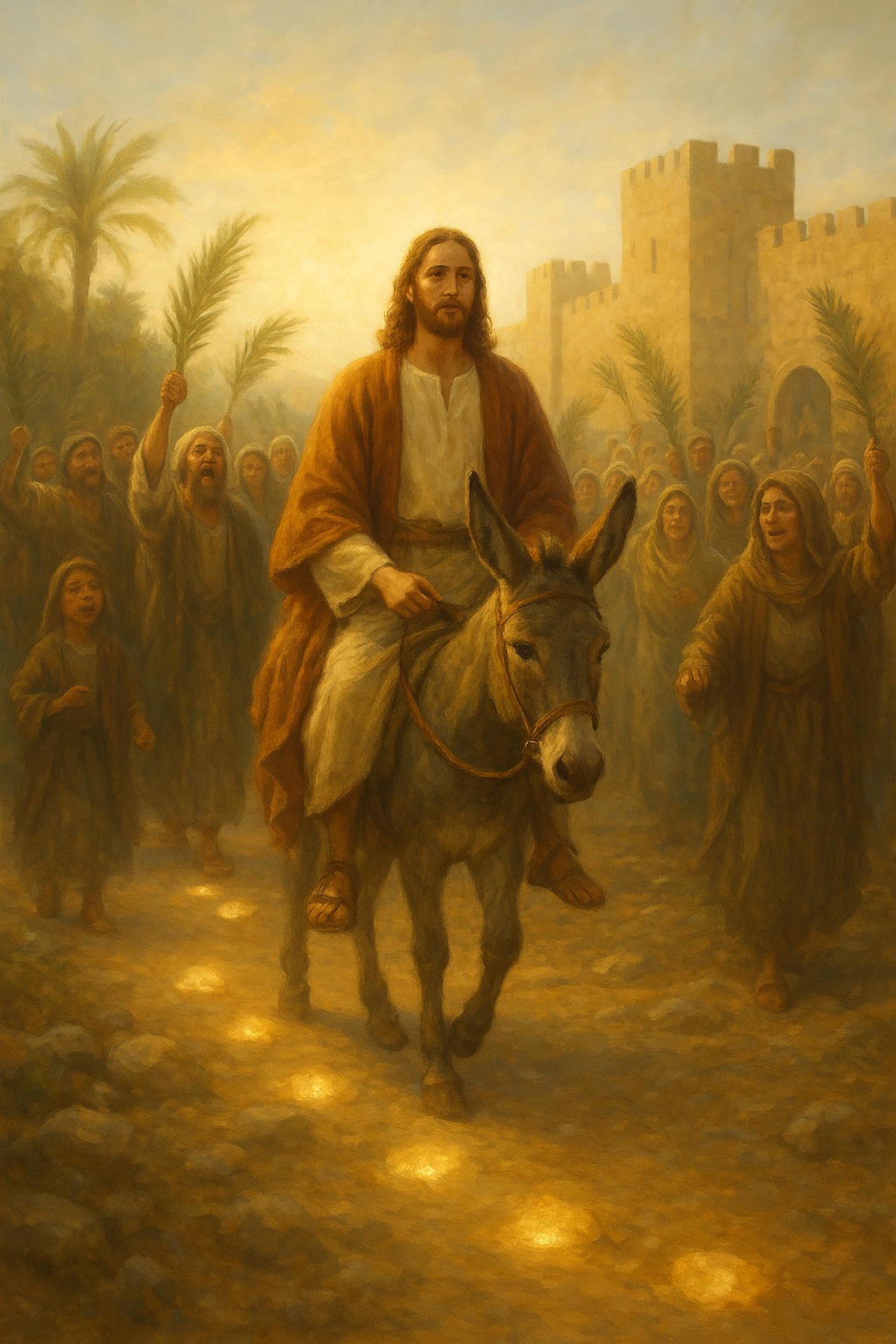
During His triumphal entry, Jesus entered Jerusalem on a donkey, fulfilling Zechariah 9:9. The crowds shouted, “Hosanna! Blessed is the King who comes in the name of the Lord!” (Psalm 118:26). The Pharisees demanded silence, but Jesus answered:
Luke 19:40 – “I tell you, if these were silent, the very stones would cry out.”
This was no mere metaphor. Jesus declared that creation itself would testify if people withheld their praise. The same Creator who could raise up children of Abraham from stones could also compel stones to worship Him. In other words, Jesus was claiming divine authority: only God is worthy of such universal praise, and if humanity resisted, creation itself would bear witness.
4. Paul: True Children of Abraham
Paul later ties these threads together by explaining who truly belongs to Abraham’s family.
Romans 9:6–8 – “For not all who are descended from Israel belong to Israel… it is not the children of the flesh who are the children of God, but the children of the promise are counted as offspring.” Galatians 3:7 – “Know then that it is those of faith who are the sons of Abraham.” Galatians 3:29 – “And if you are Christ’s, then you are Abraham’s offspring, heirs according to promise.”
The “stones” that God raised up as Abraham’s children were Gentiles and sinners who came to faith in Christ. They were once lifeless in sin, but through the Spirit they became living stones (1 Peter 2:5), built into the household of God.
Paul also echoes Jesus’ statement about creation testifying:
Romans 8:19–22 describes creation groaning and longing for the revealing of the sons of God. Just as Jesus said the rocks would cry out, Paul teaches that all creation participates in the story of redemption.
5. The Unified Theme
When we trace these passages together, the theme is unmistakable:
At Sinai – God showed Israel that He could start over; His plan does not depend on their stubbornness. With John – God exposed Israel’s pride, reminding them He could raise children of Abraham from stones. With Jesus – God revealed that creation itself would worship the Messiah, even if people tried to silence His praise. Through Paul – God clarified that true children of Abraham are not defined by bloodline but by faith in Christ.
6. Why This Matters
God will always have a people. Human rebellion cannot stop His purposes. Heritage does not save; faith does. Being a child of Abraham is about trusting God’s promises in Christ, not ethnic descent. Creation testifies to Christ. From rocks crying out to creation groaning, the whole world bears witness that Jesus is Lord. Jesus is God. Both John and Jesus use imagery of raising worshippers from stones — something only the Creator can do. This affirms Christ’s divine identity.
7. Unity in Christ: Jew and Gentile Made One
Paul’s letters make it abundantly clear that faith in Christ removes all barriers that once separated people from God or from one another.
Galatians 3:28 – “There is neither Jew nor Greek, there is neither slave nor free, there is no male and female, for you are all one in Christ Jesus.” Colossians 3:11 – “Here there is not Greek and Jew, circumcised and uncircumcised, barbarian, Scythian, slave, free; but Christ is all, and in all.”
Faith in Christ unites all believers into one spiritual family. This is the climactic fulfillment of God’s sovereign plan:
The Sinai warning showed that God’s covenant people are defined by obedience and faith, not mere heritage. John the Baptist made the same point: God could raise sons of Abraham from stones. Jesus’ triumphal entry displayed the universal recognition due to the Messiah, even if humanity resisted. Paul’s teaching confirms that all true children of Abraham — Jew or Gentile — are now one in Christ.
Thus, the imagery of stones, dust, and creation’s witness reaches its apex: God’s plan of redemption is inclusive, spiritual, and sovereign. He raises His people not by ethnicity, birthright, or human effort, but by grace through faith in Christ.
Final Thought
The Bible’s imagery of stones teaches us that God can bring life out of death, worship out of silence, and children out of lifeless matter. Whether at Sinai, the Jordan, Jerusalem, or in Paul’s letters, the message is the same: God’s covenant people are those who trust in Christ, and His praise will never be silenced — not by stubborn hearts, not by prideful leaders, not even by death itself.
As Peter later reminds us:
1 Peter 2:4–5 – “As you come to him, a living stone rejected by men but in the sight of God chosen and precious, you yourselves like living stones are being built up as a spiritual house, to be a holy priesthood, to offer spiritual sacrifices acceptable to God through Jesus Christ.”
We, once like dead stones, are now living stones, raised up to worship and bear witness to the glory of Christ.
Leave a Reply