
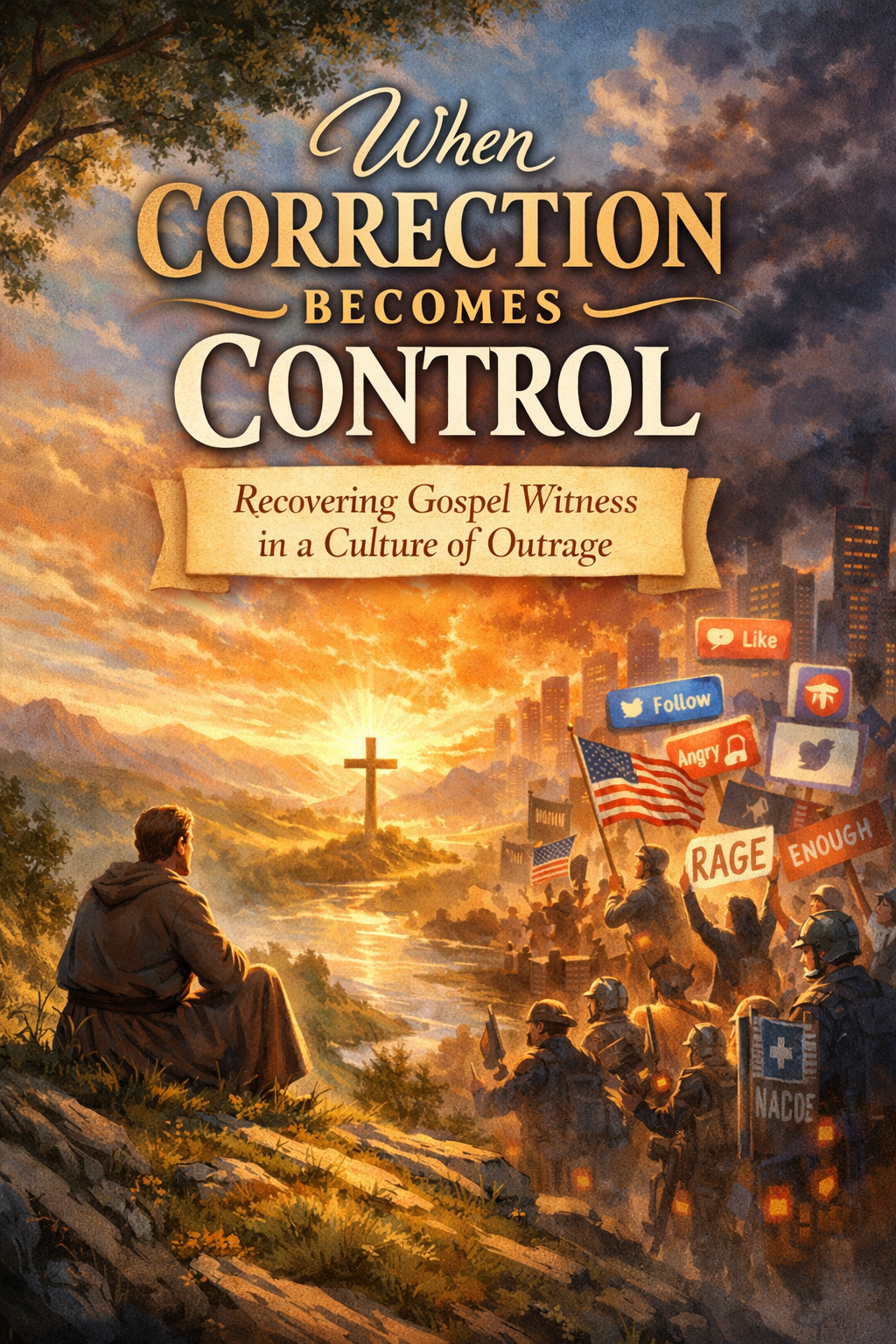
There has never been a time in church history when believers have had more access to the public square than they do now. A single comment, post, or video can travel across the world in moments. This unprecedented reach has convinced many Christians that constant political commentary, online correction, and cultural confrontation are essential acts of faithfulness. The darker the world appears, the louder the church often becomes. Yet Scripture invites us to pause and ask whether we are truly bearing witness to Christ or quietly attempting to take control of what only God can redeem.
Jesus stood before Pilate with divine authority at His disposal, yet He chose restraint rather than retaliation. He explained that His kingdom is not sourced from the world’s systems, otherwise His servants would fight to defend Him. That statement was not a retreat from truth but a declaration of trust. Jesus rested in the Father’s timing and purposes even when injustice was visibly winning. When believers today act as though every cultural shift must be met with immediate public resistance, we may unknowingly communicate that God’s reign depends on our visibility rather than His sovereignty.
Paul later reminded the Corinthians that Christian warfare is not waged with fleshly weapons but with divine power capable of demolishing spiritual strongholds. This power is not exercised through viral outrage, ideological dominance, or online clout. It is displayed through prayer that perseveres in secret, holiness that refuses compromise, truth spoken without manipulation, and a willingness to suffer without abandoning love. These are not weak responses; they are the means by which the kingdom of God quietly advances beneath the noise of the world.
Correction becomes disobedience when it substitutes control for trust. James warned that the anger of man does not produce the righteousness of God, yet many believers have been discipled by digital platforms to equate intensity with faithfulness. Peter exhorted Christians living under pagan authorities to keep their conduct honorable among unbelievers so that even slander could become an occasion for God’s glory. Paul urged the Lord’s servant not to be quarrelsome but gentle, patient when wronged, and kind to all. These are not optional virtues. They are evidences that Christ governs the heart more deeply than the culture governs the mind.
The danger is not merely tone; it is motivation. When fear, frustration, or moral panic drive our speech, the gospel becomes a tool for self-protection rather than a testimony of grace. We may win arguments while losing our witness. We may expose sin while concealing the mercy that leads sinners to repentance. The moment our correction begins to mirror the world’s methods, we cease pointing people toward a kingdom that is fundamentally different from the one they already know.
Our age has trained us to live as though everything is an emergency. Every headline feels like a final turning point. Every controversy demands immediate response. But God has never governed His purposes by reaction. Scripture consistently reveals a Lord who works patiently, often invisibly, advancing redemption through ordinary obedience rather than dramatic interventions. The gospel does not move at the speed of outrage; it moves at the speed of resurrection. It looks slow until it is unstoppable.
The early church offers a sobering contrast. Surrounded by idolatry, immorality, and systemic injustice, they were never commanded to capture Rome. They were commanded to pray, love enemies, endure suffering, care for the poor, proclaim Christ, and trust that God would exalt His Son in His time. Within a few generations, the empire that crucified Jesus was bowing its knee to His name, not because believers seized power, but because they refused to surrender their distinct witness.
To submit our will to God’s will today requires a reordering of how we engage the world. It calls us to examine not only what we say, but the spirit in which we say it. It asks whether our words resemble Jesus or the culture we claim to resist. It invites us to release the exhausting burden of trying to manage outcomes and instead commit ourselves to faithfulness in hidden places where only God sees.
The world does not need louder Christians. It needs truer ones. It needs believers whose confidence rests not in platforms or politics but in a crucified and risen Savior who is never threatened by the chaos of nations. For those caught in cycles of outrage, correction, and constant reaction, the call is not condemnation but rest. Lay down the illusion of control. Trust again in the God who is already at work. The kingdom does not advance through domination, but through surrendered hearts that are willing to follow Christ wherever obedience leads.
 Feeding the Flock Ministry
Leave a comment