
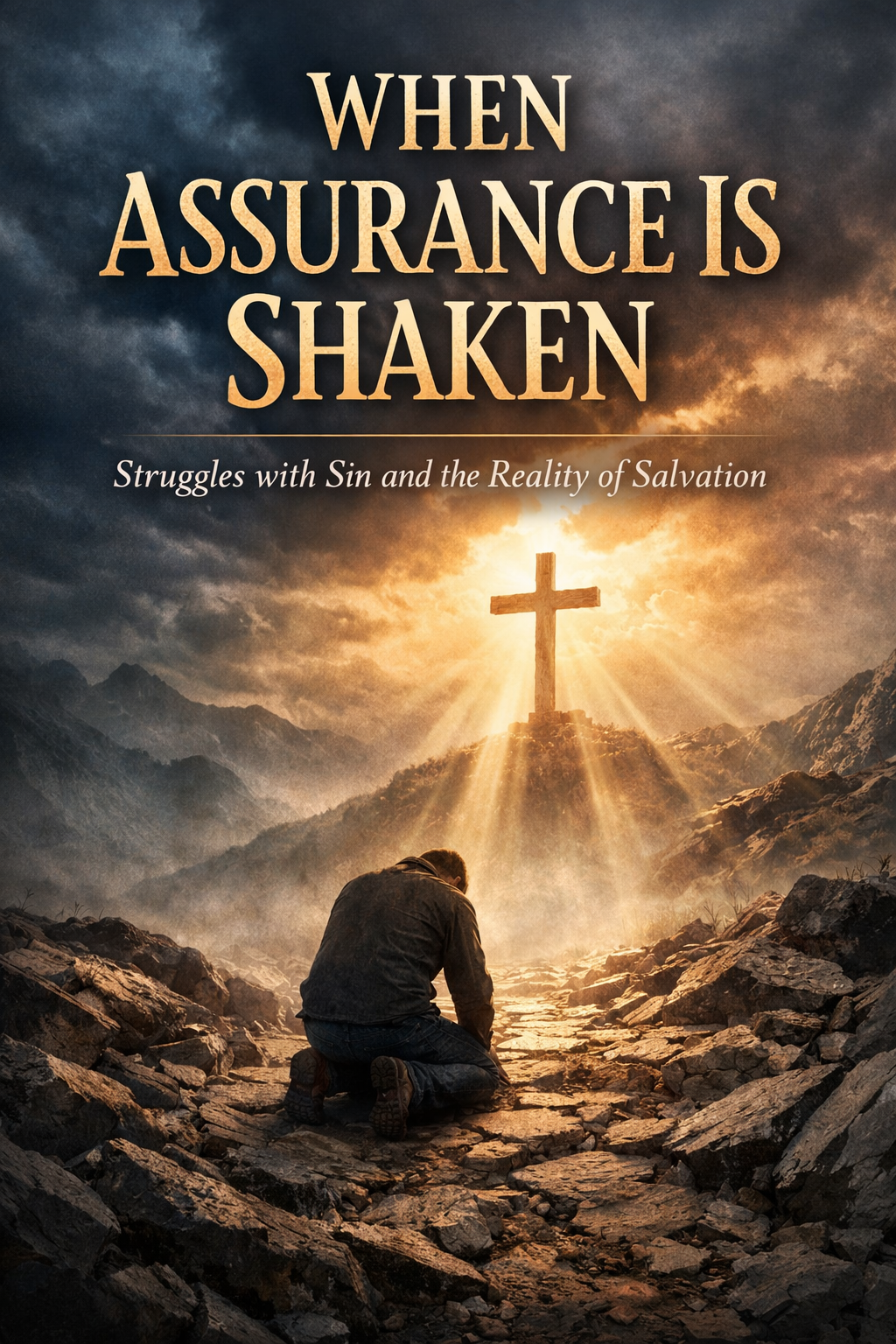
There are few accusations more spiritually destabilizing than the quiet or explicit claim that if a person truly belonged to God, they would no longer struggle with sin in any meaningful way, and for many believers this idea does not come as a formal doctrine but as a lingering suspicion that surfaces in moments of failure, whispering that ongoing struggle must mean something is fundamentally wrong with their faith. In some Christian circles this belief is reinforced more directly, creating an environment where victory is emphasized to such a degree that struggle itself becomes suspect, leaving those who wrestle with sin not encouraged to persevere but pressured to question whether they were ever truly saved at all, and while the desire for holiness is right and necessary, this conclusion goes beyond what Scripture teaches and often results in wounded consciences rather than strengthened faith.
The Root of the Misunderstanding
This belief often grows out of a misreading of passages that speak strongly against sin, particularly statements like “no one who is born of God practices sin” in 1 John, which, when read without careful attention to context and language, can sound like a declaration that true believers no longer struggle with sin at all, and when combined with an emphasis on transformation and new life in Christ, some conclude that ongoing battles with sin must indicate an unregenerate heart; however, this interpretation fails to account for the broader testimony of Scripture, including the same letter’s acknowledgment that believers do still sin and are called to confess their sins, as well as the consistent biblical portrayal of the Christian life as one of ongoing growth rather than instant perfection.
The Reality of Ongoing Struggle
Scripture presents a far more honest and realistic picture of the believer’s life, one that includes both genuine transformation and continued struggle, most clearly seen in the testimony of Paul the Apostle in Romans 7, where he describes an internal conflict in which he desires to do what is right yet finds another law at work within him, leading him to cry out in anguish over this tension, and this is not the language of an unconverted man indifferent to sin but of one who hates sin precisely because he has been changed, revealing that the presence of struggle is not evidence of spiritual death but often the very sign of spiritual life, because those who are dead in sin do not fight against it, whereas those who have been made alive in Christ experience the conflict between the flesh and the Spirit.
The Role of the Holy Spirit in the Struggle
The internal conflict believers experience is not self-generated but the result of the Holy Spirit dwelling within them, warring against the flesh and producing conviction, desire for holiness, and a longing to please God, and this means that the struggle itself is evidence of God’s presence rather than His absence, because apart from the Spirit there would be no war within, only surrender, and the grief over sin, the desire to change, and the repeated return to God in repentance all testify to a work that originates not in human strength but in divine grace, reminding us that sanctification is not merely our effort but God actively at work within us.
Justification and Sanctification: A Critical Distinction
A major source of confusion in this area is the failure to distinguish between justification and sanctification, because justification is the once-for-all act of God declaring a sinner righteous through faith in Christ, while sanctification is the ongoing process by which a believer is gradually conformed to the image of Christ, and when these are blurred together, people begin to measure their standing before God by their progress in holiness rather than by the finished work of Christ, leading to a fragile and fluctuating assurance that rises and falls with personal performance, but Scripture consistently grounds assurance not in our perfection but in Christ’s righteousness credited to us apart from our works, meaning that while growth in holiness is the evidence of genuine faith, it is not the basis of our acceptance before God.
The Difference Between Struggle and Surrender
It is essential to distinguish between struggling with sin and surrendering to it, because a person who is alive in Christ may fall into sin, sometimes even repeatedly, but they cannot settle comfortably into it without conviction, as the Spirit within them produces a tension that refuses to let sin remain unchallenged, whereas a heart untouched by grace may sin freely without grief, replacing repentance with justification and conviction with indifference, and this means that the issue is not the presence of sin but the posture toward it, not perfection but direction, not whether sin exists but whether it is resisted or embraced.
The Danger of Perfectionism
The idea that true believers should not struggle with sin often leads to a form of practical perfectionism, even when it is not explicitly named, creating an environment where people either hide their struggles to appear spiritually mature or despair when they cannot live up to the standard set before them, and this not only distorts the Christian life but undermines the gospel itself by shifting the focus from what Christ has accomplished to what we must achieve, producing either pride in those who believe they are succeeding or crushing discouragement in those who know they are not, neither of which reflects the humility and dependence that the gospel produces.
The Witness of the Apostles
The broader witness of the New Testament reinforces the reality that believers continue to struggle with sin, as Paul the Apostle repeatedly exhorts Christians to put to death what is earthly in them, to flee from sin, and to pursue righteousness, commands that would be unnecessary if sin were no longer a present reality, and even more telling is the instruction given to Timothy and others regarding ongoing growth, discipline, and perseverance, all of which assume that the Christian life is a journey marked by progress, setbacks, repentance, and continued reliance on God’s grace.
What 1 John Actually Teaches
A careful reading of 1 John reveals that the apostle is not teaching sinless perfection but addressing a pattern of unrepentant, habitual sin that characterizes those who do not truly know God, while also affirming that believers do sin and have an advocate in Christ when they do, and the distinction is not between those who struggle and those who never struggle, but between those who live in sin without conviction and those who, though they may fall, are grieved by their sin and turn back to God, meaning that the very presence of conviction and repentance is evidence of the Spirit’s work rather than proof of spiritual absence.
What Jesus Actually Meant: Love and Obedience
A passage often used to support the idea that true believers would not continue in sin comes from John 14:15, where Jesus Christ says, “If you love Me, you will keep My commandments,” and while this statement is sometimes interpreted to mean that genuine love for Christ results in sinless obedience, such a conclusion cannot be sustained in light of the rest of Scripture, which clearly teaches that believers still sin, and instead must be understood in its proper context as part of Jesus’ intimate teaching to His disciples, where He is describing not flawless performance but the natural outworking of a relationship with Him. In this statement, love is the root and obedience is the fruit, meaning that those who truly love Christ will develop a growing desire to obey Him, not perfectly or instantly, but genuinely and progressively, and this obedience is not self-generated but empowered by the Spirit whom Jesus promises in the very same context, which means that His words are not a demand for perfection but a description of direction, not a test to condemn but a truth that reveals the transforming nature of love for Him, and therefore the presence of ongoing struggle does not contradict this teaching but fits within it, as believers fight sin, repent when they fail, and continue to grow in obedience over time.
A Warning Against Misusing Grace
Scripture never presents grace as permission to make peace with sin, and while the presence of struggle can be evidence of life, the absence of repentance is a serious warning sign, because the same gospel that comforts the broken also calls the sinner to turn, reminding us that assurance is not found in empty profession but in a living faith that continues to respond to God, and therefore grace must never be twisted into an excuse for complacency but embraced as the power that leads us to transformation.
When the Struggle Feels Repetitive
There are believers who find themselves caught in patterns of sin they deeply hate yet struggle to overcome, and while this should never be taken lightly, it also does not automatically mean their faith is false, because sanctification is often a slow and uneven process, especially in areas shaped by long-standing habits, wounds, or deeply ingrained struggles, and in such cases the call is not to despair but to press in more deeply through repentance, accountability, prayer, and dependence on God’s grace, trusting that God is at work even when progress feels painfully slow.
The True Evidence of Salvation
The true evidence of salvation is not sinless perfection but a transformed relationship to sin, where what was once loved is now resisted, what was once ignored is now confessed, and what once ruled is now being put to death, even if imperfectly, and this transformation may be gradual and uneven, marked by both progress and setbacks, but it is real and reflects the ongoing work of God in the life of the believer, reminding us that salvation is not only a moment in the past but a process that continues to unfold.
A Word to Those Who Have Been Shaken
For those whose assurance has been shaken by this teaching, who find themselves questioning their salvation because they still battle sin, it is crucial to understand that the Christian life is not defined by the absence of struggle but by the direction of the heart, because a believer may stumble, sometimes repeatedly, yet still belong to Christ if they continue to turn to Him in repentance and faith, and the question is not whether you fight but whether you are fighting at all, not whether you fall but whether you remain in sin without resistance, because the presence of a battle within you is often the clearest indication that something new has taken root.
A Historical Reminder: You Are Not Alone
This struggle with assurance is not new, as even faithful believers throughout history have wrestled deeply with doubt and the tension between their sin and their faith, including figures like Martin Luther and John Bunyan, who both experienced intense spiritual battles yet were used powerfully by God, reminding us that seasons of doubt and struggle do not disqualify a believer but often become the very context in which God deepens their understanding of grace.
Resting in Christ, Not in Yourself
Our assurance ultimately rests not in the consistency of our struggle or even the strength of our repentance but in the sufficiency of Christ, because if assurance is built on our performance, it will always feel unstable, but when it is rooted in what Christ has accomplished on our behalf, it becomes steady even in the midst of weakness, allowing believers to look away from themselves and fix their eyes on the One who has secured their salvation fully and finally.
A Call to Rest in Christ and Press On in Holiness
The Christian life is not marked by the absence of sin but by a war against it, not by flawless obedience but by a heart that continually returns to Christ, and not by perfect strength but by persistent dependence, and therefore the call is not to look inward in fear at every failure but to look outward to Christ, to rise again in repentance, and to continue walking forward in faith, trusting that the One who saved you is also the One who is faithfully transforming you and will carry His work to completion.
Leave a Reply